When should a child begin to train, and why the old fear was wrong
Most parents think lifting weights is dangerous for children. Twenty years of paediatric consensus disagree, and the reason has more to do with the nervous system than with muscle.
Most parents think lifting weights is dangerous for children. Twenty years of paediatric consensus disagree, and the reason has more to do with the nervous system than with muscle.

Parents are told that writing by hand is vital for their child's growing brain, and that screens are eroding it. We sort the viral headlines from the solid evidence, and find the real benefit belongs to one group above all: children still learning their letters.
Your child's fussiness for food is mostly inherited, and most of the things parents try in order to fix it make it worse. Find out why young children refuse food, why it is rarely a parent's fault, and the unglamorous method that genuinely changes how they eat.
We often blame addictive apps for our children’s screen habits. But new research reveals a deeper truth: teenagers turn to smartphones to manage feelings they cannot identify. This means we can help. By strengthening their emotional skills, we can break the cycle and move beyond the tech.


Your teenager is staring at their phone, again, their thumb flicking through a seemingly never-ending stream of short videos. As a parent, your first instinct is to blame the app your kid is using, grumbling about how tech companies have designed software our children cannot resist.
For years now, us parents have tried to control our adolescent’s smartphone and social media use by trying to control access to the technology itself. We attempt to restrict their screen use by setting strict daily time limits, installing software that blocks certain apps, or simply taking the phone away altogether.
However, research published last week shows that focusing entirely on restricting the device completely misses the real problem. Teenagers rarely scroll constantly just because of the technology itself.
The central revelation from this new research can be stated simply: teenagers are not just passively hooked by clever algorithms. They are actively using social media and short videos to distract themselves from uncomfortable feelings they do not know how to handle.
Understanding this completely changes how we must help our children.
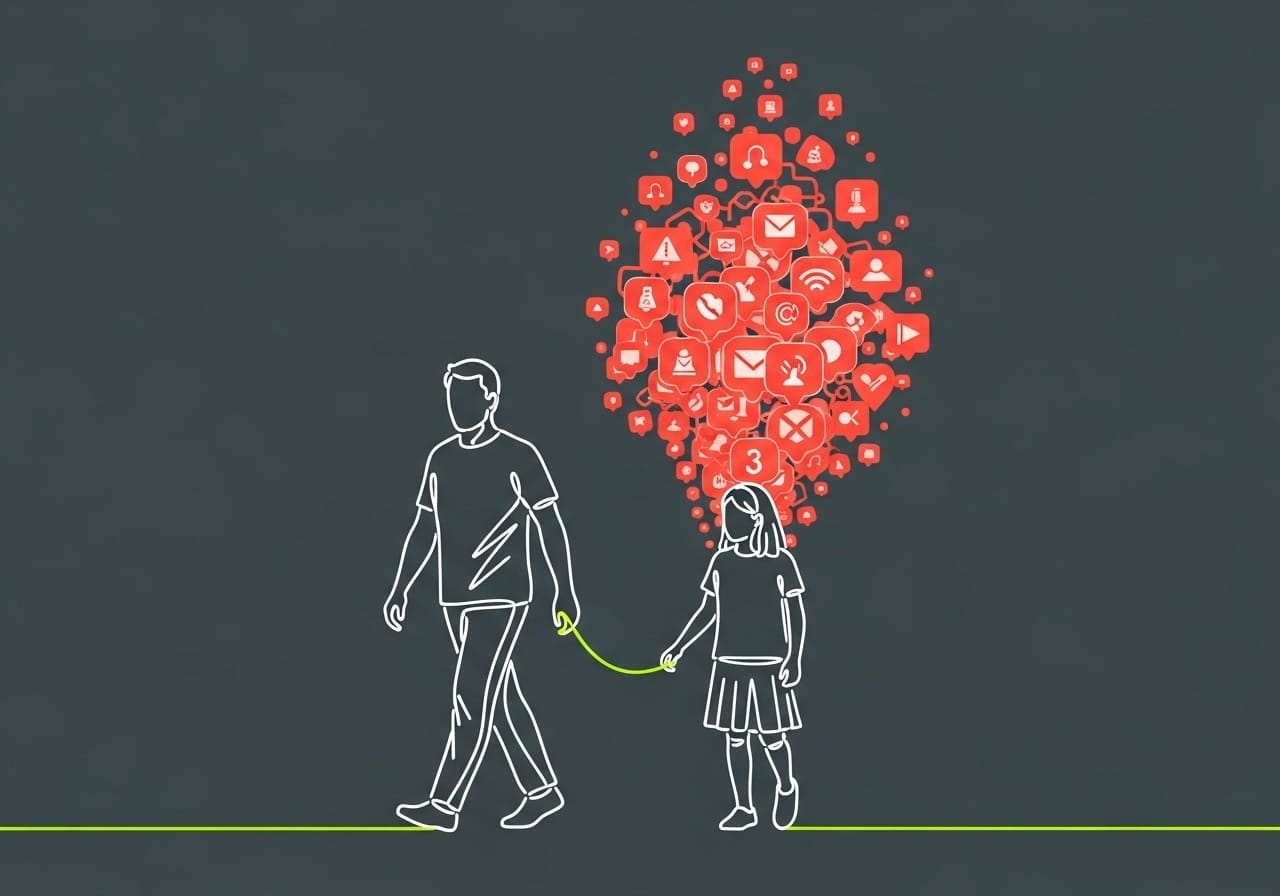
If we believe our children’s compulsion to scroll is caused only by the technology, we become relatively powerless to intervene, reduced to fighting a losing battle against billion-dollar tech companies and their design teams. We wait for governments to regulate apps or for schools to ban phones. Neither of which helps our kids today, or tomorrow even.
However, the latest scientific research suggests there is something we can do, because the issue lies just as much within our children's ability to recognize and manage their own emotions.
Physically limiting our removing our kid’s phone use is a superficial fix. One that ignores the internal emotional distress our children may be going through, which is driving their online behavior in the first place.
The research suggests that teenagers watch short videos to avoid emotional discomfort. So while we cannot rewrite the code of a social media app, we can teach our children how to understand their feelings. This puts the power to solve the problem directly back with us.
Researchers use the term alexithymia to describe a difficulty in identifying and describing feelings. Imagine feeling a strong sense of distress but having no words to explain what it is or why it is happening. For a teenager going through the physical and social changes of adolescence, lacking the words to describe or express their feelings makes an already difficult time much harder.
A major 2026 study led by Haodong Su, published last week, mapped out exactly how this inability to name emotions leads directly to short video addiction.

The researchers found that teenagers scroll constantly because they are already overwhelmed by feelings they cannot manage. These overwhelming feelings usually start with basic, everyday worries. A teenager might fear being rejected by friends, feel unsure of their place in a group, or constantly need reassurance from others.
The researchers found that experiencing these worries directly impairs a child's attention. Their ability to consciously shift their focus between what is happening around them and what is happening inside their own head begins to break down. Worry compromises their attention, causing them to lose the ability to look inward and process their own thoughts and feelings. Eventually, they completely lose the ability to recognize their own emotions.
When a child cannot process their feelings internally, they look for an external distraction to manage the distress for them. Short videos do this highly effectively. They offer a fast, continuous stream of sights and sounds that requires zero emotional effort.
The constant novelty immediately distracts them, allowing them to temporarily mute feelings of inner emptiness or social anxiety. The app manages the emotions the teenager's brain cannot handle on its own.

This inability to process emotions is not limited to a small group of teenagers who are obviously struggling. It affects a massive portion of the population, including high achievers. A detailed 2024 study examining medical students - a group generally assumed to have high cognitive function and social awareness - found that over 35 percent of the cohort demonstrated clear or possible alexithymia.
Crucially, the study revealed that this inability to process their own emotions caused a secondary, serious problem: a severe drop in their empathy for others.
When a young person cannot identify their own internal state, they lose the capacity to recognize and relate to the feelings of the people around them. This creates a deeply isolating cycle. They feel internal discomfort, turn to a screen for distraction, isolate themselves further from real human connection, and subsequently lose their real-world empathy.
Understanding this lack of emotional regulation changes how we should interpret common teenage complaints.
Take the Fear of Missing Out (FOMO). We tend to think our children are anxious because they see photos of a party they were not invited to. However, clinical findings presented at the 34th European Congress of Psychiatry in 2026 showed there is no direct link between emotional difficulties and a specific social fear.
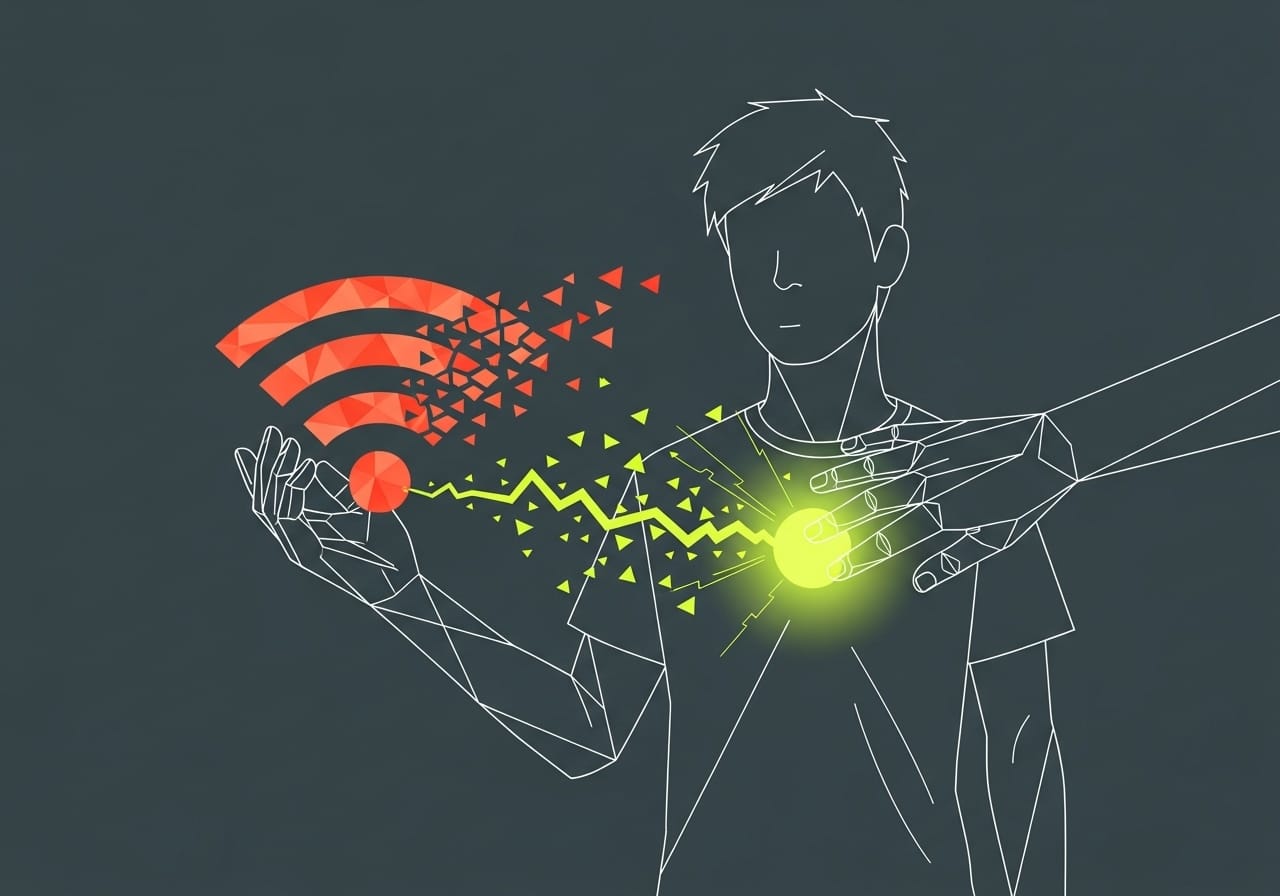
Instead, teenagers experience an anxiety they simply cannot name. When they look at social media, they attach their generalized, internal discomfort to the pictures they see. Their social panic is a symptom of their underlying distress, not the cause.
The same process happens with body image. An inability to process their own self-worth internally leads adolescents to fixate on external, physical flaws. They convince themselves they feel bad because of how they look, rather than realizing they are overwhelmed by unprocessed emotions.
They scroll and compare themselves to others in a misguided attempt to make sense of why they feel so uncomfortable.
This misdirection of anxiety also affects them physically. A March 2026 study analyzing the intersection of alexithymia and chronic physical pain found a similar pattern.
An inability to process emotions does not directly cause physical pain, but the resulting unmanaged psychological distress makes the experience of pain significantly worse. Their emotional distress creates heightened psychological tension, which then amplifies their physical discomfort.

If we shift our focus from confiscating devices to talking about feelings, we give our teenagers the tools they need to process their own emotions and reduce their reliance on the digital world.
To actually help them, we need to focus on a few practical steps:
2026, Su, H., et al., From attachment anxiety to short video addiction: the roles of attentional control and alexithymia, Frontiers in Psychology
2026, Serdengeçti, N., Can Aydın, A. B., Yavuz, M., The Relationships Among FoMO, Problematic Social Media Use, Alexithymia, and Psychiatric Symptoms in Adolescents [O015], European Congress of Psychiatry
2026, Aaron, R. V., et al., Temporal pathways between alexithymia, psychological distress, and pain: An autoregressive mediation analysis, Health Psychology
2024, Ursoniu, S., The interconnection between social media addiction, alexithymia and empathy in medical students, Frontiers in Psychiatry
2023, Gori, A., Topino, E., The Association between Alexithymia and Social Media Addiction: Exploring the Role of Dysmorphic Symptoms, Symptoms Interference, and Self-Esteem, Controlling for Age and Gender, Journal of Personalized Medicine

Your child's fussiness for food is mostly inherited, and most of the things parents try in order to fix it make it worse. Find out why young children refuse food, why it is rarely a parent's fault, and the unglamorous method that genuinely changes how they eat.

Most of what shapes a young life turns out to be joyful and ordinary. A major new study shows what teenagers themselves treasure, and why the way they answer can tell you how they are really doing.

Chronic pain in children is more common than being left-handed. And adults are surprisingly bad at reading how much pain a child is in. This is what all parents should know.


When a child receives a mental health diagnosis, whether anxiety, ADHD, depression, or something else, parents often want to know how it will impact their schooling. A new study provides some answers.