Most children begin to wonder about Santa at around seven. Researchers have asked children and adults how they found out, how they felt and for how long, and their answers give a parent more to go on than the magic of Christmas.
There is an old saying that children grow in their sleep. Scientists have found hints that it may be partly true, but there is no good evidence that more sleep makes a child taller. However, there are good reasons to make sure your child gets enough sleep, and they are to do with your child's weight.
Most parents think lifting weights is dangerous for children. Twenty years of paediatric consensus disagree, and the reason has more to do with the nervous system than with muscle.
When do children find out about Santa, and does it matter how?
Most children begin to wonder about Santa at around seven. Researchers have asked children and adults how they found out, how they felt and for how long, and their answers give a parent more to go on than the magic of Christmas.
Almost every family that celebrates Christmas faces the same question sooner or later: when and how should a child find out about Santa? Yet almost none of us know what the research says.
🎧
20 minute listen — Listen to this feature on the go. (AI-voiced for accessibility; 100% human-edited and checked).
When do children find out about Santa, and does it matter how?
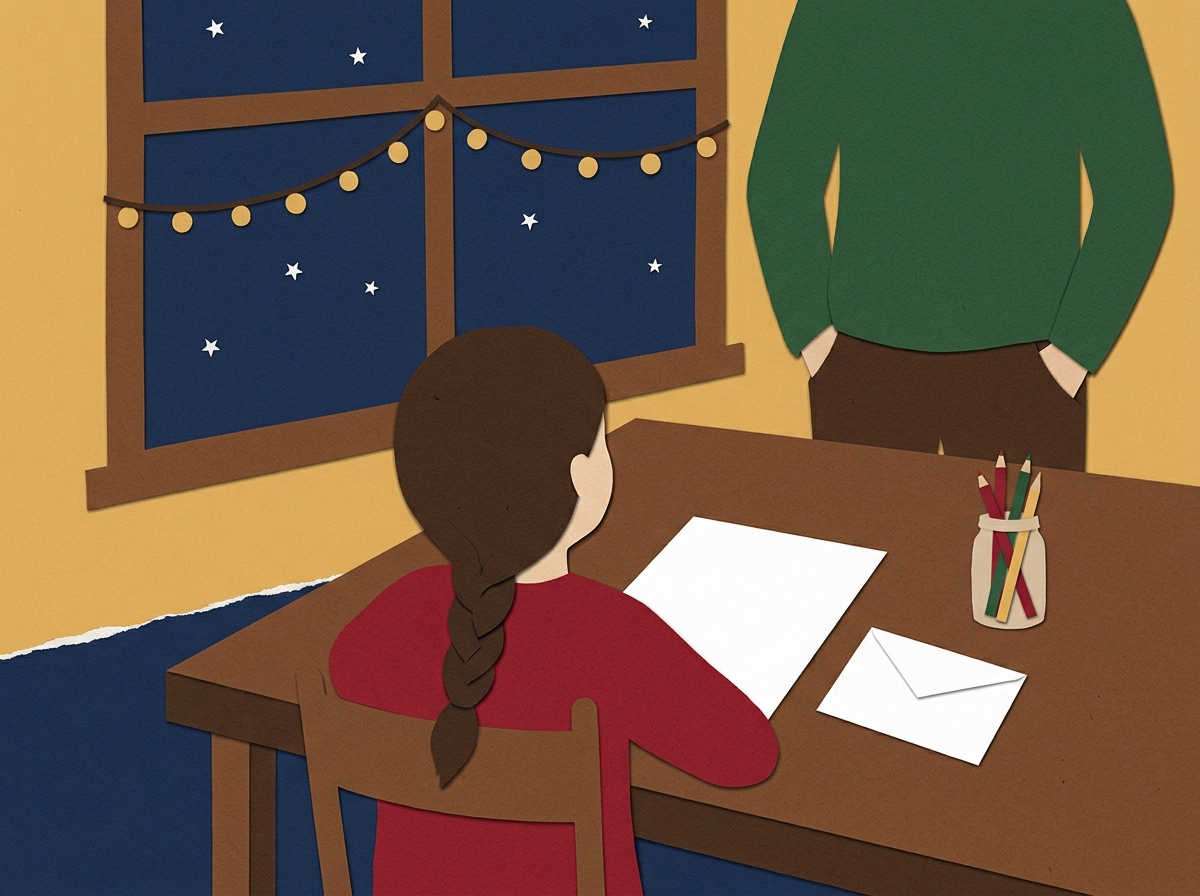
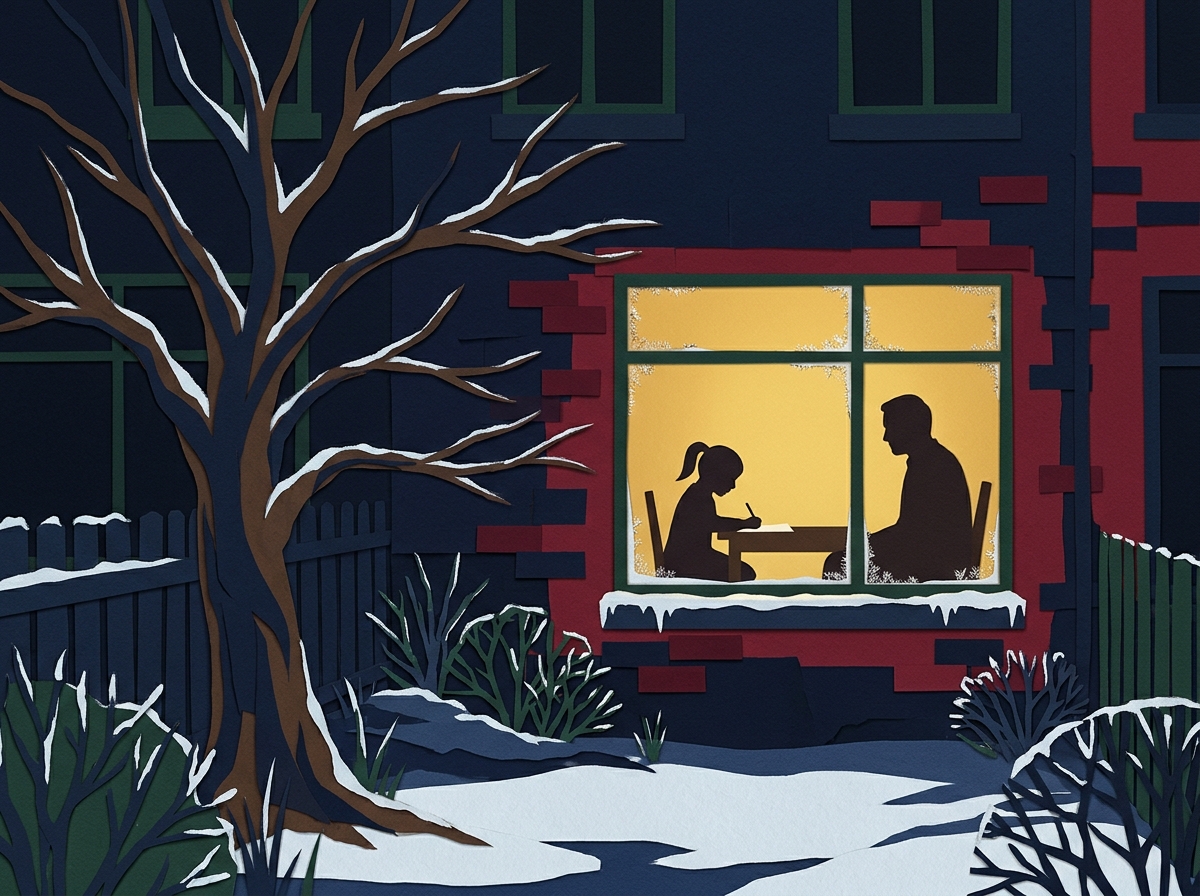
On an evening in early December, a seven-year-old sits at the kitchen table writing her letter to Santa. Halfway down the page she stops and looks up at her father. She wants to know how one man can get round the whole world in a single night.
Her father has a second or two to decide what to say. He could give an answer that settles the matter for another year, or he could let this be the year she finds out.
And at that precise moment, a mild feeling of dread overcomes him. He is realising, for the first time and at completely the wrong time, that he has never decided how or when she should find out that no man can be that fat and still fit down a chimney, keep the soot off his clothes and beard, talk to reindeer, deliver billions of presents in one night, and then disappear to who knows where for another 364 days, before doing it all again without ever getting older.
Instead, each December he and her mother have done what they did the year before, and have fumbled their way through an answer about the 'magic of Christmas'.
He now has questions of his own. Is seven the usual age for a child to start asking whether Santa Claus is real? Does it matter whether she works it out for herself or is told, and who tells her? And how will she feel when she finds out, about Santa and about her parents, and the fibs they told her?
Luckily, for the father, and parents everywhere, researchers have asked these questions. Candice Mills, of the University of Texas at Dallas, and four colleagues did so in a study published in 2024 in the journal Developmental Psychology. They interviewed 48 American children who had found out the truth about Santa Claus, and surveyed 383 adults about their memories of finding out he wasn't real. On average, the children began to doubt just before seven and had found out by about eight.
About half of the children mentioned one or more negative feelings associated with finding out the truth, such as sadness or anger, and about half of the adults remembered some sadness. Asked how long their reaction had lasted, whatever it had been, just under half of the adults who answered said that it had passed within a month. But about three in ten said several months or more, or simply a long time.
The team also put the father's last question to the children themselves: did they trust their parents any less for having been told that Santa was real? About three in four said they trusted their parents just as much as before, and about one in five said they trusted them less. But it was one question, asked once, and it leaves the father's worry about trust only partly answered.
Furthermore, most of the research is American, the people who took part were volunteers, and the adults were remembering their childhood. And no researcher has followed children over the years as they find out, or tested one way of finding out against another.
At what age do children find out?
The father's first question is whether seven is the usual age. Mills's team recruited American families in 2019 and 2020 through flyers, social media and a website for research volunteers. The children were aged six to fifteen, and 44 of their parents filled in a questionnaire. The 383 adults, who were asked about their own memories, answered an online survey in 2020.
The children said they had begun to doubt when just under seven years old, on average, and had found out at just under eight. But the ages at which they had found out ranged from four to twelve. The adults remembered finding out at about eight and a half.
Mills's team caution that people who volunteer for such a study may differ from people in general. And these families were mostly white and highly educated: 27 of the 44 parents held a master's degree or a doctorate. So children in other families may find out earlier or later.
So children seem to start to wonder at about seven, and to find out at about seven or eight. But perhaps more important than when a child finds out that Santa isn't real is how they find out.
How do children find out the truth about Santa?
Mills's team asked each child how they had found out, and sorted the answers into three kinds. Of the 48 children, 38 mentioned something they had been told or had overheard, whether from a parent, a classmate, a brother or sister, or a book. Twenty-seven mentioned something they had seen or noticed for themselves. Only seven described reasoning that the story of Santa Claus could not be true. Nearly half gave more than one kind of answer.
The children also described the clues that had told them Santa was not real. One child noticed that Santa and their mother used the same wrapping paper, so the presents must have come from home. Another realised that their chimney had no opening, and wondered how Santa could appear at the bottom of it. A third reasoned that Santa could not travel around the whole world in one night.
Few described a single moment. About one in five of the 48 said that they had found out all at once, more called it gradual than gave any other answer, and the rest described a mixture or were unclear.
And many of the adults remembered hiding their conclusion from someone. About six in ten of the adults who answered, 212 of 344, remembered hiding the fact that they no longer believed, and 92 of the 212 had hidden it from their parents. So a child who asks a question at the kitchen table may already know more than she is letting on.
As for who does the telling, Mills's team did not compare children told by a parent with children told by a brother, a sister or a classmate.
How do children feel afterwards, and for how long?
Mills's team asked the children and the adults what they had felt on finding out. But they recorded only whether a feeling was mentioned, so they cannot say how strong it was.
Of the 48 children, 46 per cent mentioned at least one negative feeling about finding out the truth about Santa. A third mentioned sadness and one in six mentioned anger, and some mentioned both. But nearly as many, 44 per cent, mentioned being happy, often because they would still get presents or because they had been right.
Among the 344 adults who answered, 52 per cent remembered some sadness and 10 per cent some anger, and 37 per cent remembered only negative feelings. But the authors think that people with strong memories may have been more likely to answer the survey.
Mills's team asked the adults how long their reaction had lasted, whatever it had been, and 254 answered. About one in five said that it had faded quickly or within a day, and about one in four said between a week and a month. So just under half put it at a month or less.
But about one in seven said several months or longer, and a further one in six said only that it had been a long time. Most of the remaining adults could not remember.
Seung Heon Yoo and Karl Rosengren, of the University of Rochester, in New York State, and a colleague at the University of Wisconsin-Madison, asked a broader question. Santa is not the only figure that parents present to small children as real: there is also the Tooth Fairy, who leaves money under the pillow, and the Easter Bunny, who hides the eggs. Sooner or later children find out that none of them is real, and the team asked parents how they had felt, as children, when they found out about the figures of their own childhood. In September 2024 they surveyed 486 American parents of children aged three to eight through an online research panel, and published the results in 2025. Of the 335 parents who remembered how long their reaction had lasted, 260, or about three in four, said less than a few days. But those parents were mostly white, Christian and well educated, and they too were looking back on their own childhoods.
Parents do not always notice how their child feels about it. Mills's team also asked the parents what their child had felt on finding out the truth about Santa. Where the parent or the child reported a negative feeling, the two agreed in only four families. In 13 the child reported one and the parent did not, and in eight it was the other way round.
So his daughter's feelings may well be mixed, and any sadness may not be gone within days.
Who remembered only negative feelings?
Mills's team looked at what the adults who remembered only negative feelings had in common. They had found out later than the others: at about nine, on average, against just over eight, a gap of ten or eleven months. They also remembered their families keeping up slightly more Santa customs, such as a warning about being naughty or nice: about ten customs on average, against about nine for the other adults. They were more likely to remember finding out abruptly, though that link was weak. And they more often remembered being told, another weak link, and less often remembered noticing things or reasoning it out for themselves.
But these are small differences between groups that overlap, and they rest on what adults remembered of something that happened many years earlier, so they may not be exact. In the children, the team found only one of those four patterns: those who reported a negative feeling had parents who reported more Santa customs, about nine customs against about seven from a list of thirteen. And with only 44 families, the team could only just tell that difference apart from chance.
And the team cannot say why the adults who remembered only negative feelings had more often found out late, suddenly and by being told. An older child may be upset because they are older, or because they are the last in the class to know, or because their family made more of Santa.
So back to the father's second question: does it matter whether his daughter works it out for herself or is told? Researchers have two findings on this, one from Mills's survey of adults and one from the 1994 study of 52 children, and they do not agree.
The first is that the adults who remembered only negative feelings were more likely to have been told that Santa was not real, rather than working it out for themselves. But that link was weak, the telling could have come from anyone, such as a parent, a brother or sister, or a classmate, and the children in the same study showed no such link. The second is from the 1994 study of 52 children. Mills's team note that children whose parents had told them the truth were no more upset than those who had worked it out.
Neither finding settles whether the father should tell his daughter or let her work it out.
How much do families make of Santa?
The 44 parents in Mills's study reported, on average, nearly eight Santa customs from the list of thirteen, such as presents from Santa, a visit to him, and warnings about being naughty or nice. The letter the girl is writing is on that list.
In Mills's study, the parents who reported more Santa customs tended to have children who had begun to doubt later and found out later. But not every child fitted that pattern. And the parents may have been following the child, because a child who still believes gives them more reason to carry on.
One team tested the question on a figure they had invented themselves, the Candy Witch, who swaps a child's sweets for a toy. For a study published in 2009, they told 77 American children aged three to seven about her in the fortnight before Halloween, and the parents of 49 of them chose to play the Candy Witch themselves: overnight, they took away their child's Halloween sweets and left a toy in their place. About three weeks after Halloween, the team asked the children whether she was real. Nearly all of the children whose parents had played the witch, 94 per cent of those who answered, said that she was real. So did nearly three-quarters of the other children who answered, 73 per cent.
So more of the children believed in the Candy Witch when their parents had played her part. But the parents, not the researchers, decided whether to do it, and parents who join in with make-believe may differ from other parents in ways that also shape what their children believe. So the study cannot show that the swap itself made the children believe. And after Halloween the team measured the children's belief in the Candy Witch in four ways, the last of them a year later, and on two of those four the children whose parents had played her were not clearly more likely than the others to say she was real. If children come to believe in Santa in a similar way, most will accept him once adults tell them about him, and more may believe when their parents leave signs that he has been, such as presents from Santa.
So what the girl's parents do each December may be part of the reason she is still writing to Santa at seven.
What do parents say when a child asks?
According to the 2009 review by two Canadian academics, researchers asked about 70 American parents, for a survey published in 1994, what they would say if their child asked whether Santa is real. Of those parents, 57 per cent would say yes, 22 per cent would say no, and 21 per cent would give an evasive answer, such as asking the child what they think. But those parents were asked three decades ago, and they were saying what they thought they would do, not what they actually did. And no researcher has tested one answer against another to see which leaves a child better off.
Whatever the father says, he may mind more than his daughter does when she finds out. In the 1994 study of 52 children, the children reported "predominantly positive" reactions, and their parents described themselves as "predominantly sad".
He may also have a bigger worry than what to say tonight: whether he has been lying to her all along, and what that will do to her trust in him.
Do children trust their parents less afterwards?
In 2016 two academics, one at the University of Exeter and one at the University of New England in Australia, argued in The Lancet Psychiatry that the Santa story is a lie that adults tell together. A child who finds out, they argued, may ask what else their parents have lied about, and the discovery might affect the trust between them. But the two academics wrote an essay, and they report no data on harm.
Mills's team cite that essay, and then cite studies of parents who lie to their children to control how they behave or feel. The researchers who named this "parenting by lying" found it is very common: in their 2009 study, 78 in every 100 parents recognised at least one such lie they had told, and 88 in every 100 university students recognised one that had been told to them. Six of the nine lies they asked about were meant to make a child behave, such as warning a crying child that the police will come if they don't stop, and three were meant to make a child feel good, such as false praise. The researchers deliberately left out Santa and the Easter Bunny. Later studies asked young adults which of these lies they remembered their parents telling them as children. In a 2017 study of 50 students at a Canadian university, those who remembered more of these lies said they lied more to their own parents, and reported more rule-breaking, aggression and antisocial behaviour. But when similar questions were put to 182 students in Istanbul, in a study published in 2021, those who remembered more of these lies again said they lied more to their parents, but the link with rule-breaking and aggression did not appear. And in a 2024 review, two of the 2009 researchers and two colleagues wrote that these studies show a link, not that the lying causes the difficulties. None of those three studies of parents' lies asked about Santa.
Mills's team asked 47 of the children whether they trusted their parents less for having been told that Santa was real. Thirty-six said they trusted them just the same, ten said less, and one said more. But that was a single question, sometimes asked with a parent in the room, and the team did not go back later to see whether the ten still felt the same.
So most of the children who were asked reported no loss of trust, but ten of the 47 did.
What a parent can do
Back at the kitchen table, the father's seven-year-old daughter is still waiting for an answer to her question about how Santa gets round the world in one night. The brutal, honest, and incredibly unhelpful answer to his question is that nobody knows for sure. Nobody has tested one way of finding out against another, so no researcher can yet say which answer is best for her. Mills's team offer tentative advice from their own data, but say they are "hesitant to draw strong conclusions".
Mills's team point out that children become sceptical about Santa at roughly seven or eight years old, on average. They suggest that the best way for a child to find out the truth about Santa is for parents to make less of Santa, and to let the child work it out gradually and for themselves.
When his daughter does find out, she may be sad or cross, and she may also be pleased to have been right. She may not show him how she really feels. So he can ask her, and ask again a few weeks later, because some of the adults in Mills's study remembered their reaction lasting for months.
Tonight he can at least stop wondering whether seven is early, because seven is about the age at which the children in Mills's study began to doubt whether the wonderful, strange and seductive story of Santa Claus is real. And his daughter may already know more than she has said.
Translating underreported science into evidence-based clarity. We provide a studious sanctuary of peer-reviewed research to help you move beyond mainstream advice with empathy and confidence.
There is an old saying that children grow in their sleep. Scientists have found hints that it may be partly true, but there is no good evidence that more sleep makes a child taller. However, there are good reasons to make sure your child gets enough sleep, and they are to do with your child's weight.
Most parents think lifting weights is dangerous for children. Twenty years of paediatric consensus disagree, and the reason has more to do with the nervous system than with muscle.
Parents are told that writing by hand is vital for their child's growing brain, and that screens are eroding it. We sort the viral headlines from the solid evidence, and find the real benefit belongs to one group above all: children still learning their letters.
Your child's fussiness for food is mostly inherited, and most of the things parents try in order to fix it make it worse. Find out why young children refuse food, why it is rarely a parent's fault, and the unglamorous method that genuinely changes how they eat.