Most children begin to wonder about Santa at around seven. Researchers have asked children and adults how they found out, how they felt and for how long, and their answers give a parent more to go on than the magic of Christmas.
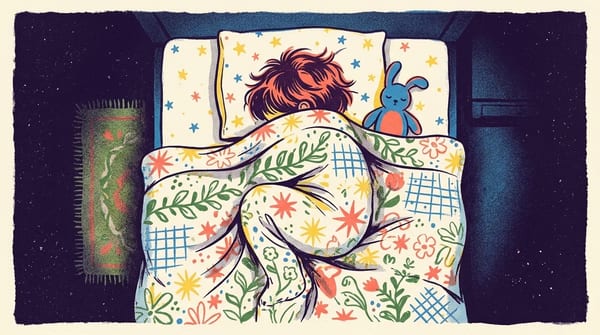
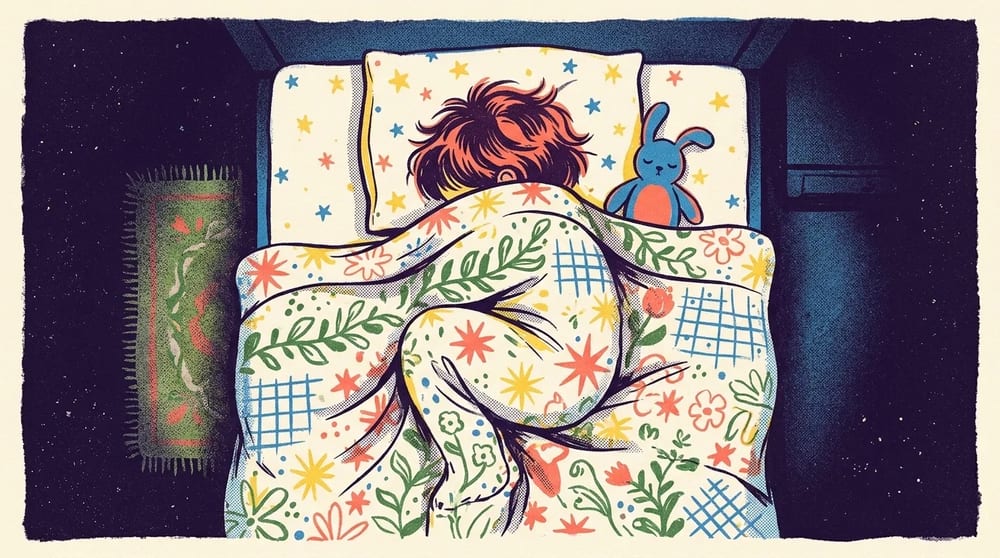
There is an old saying that children grow in their sleep. Scientists have found hints that it may be partly true, but there is no good evidence that more sleep makes a child taller. However, there are good reasons to make sure your child gets enough sleep, and they are to do with your child's weight.
Most parents think lifting weights is dangerous for children. Twenty years of paediatric consensus disagree, and the reason has more to do with the nervous system than with muscle.
There is an old saying that children grow in their sleep. Scientists have found hints that it may be partly true, but there is no good evidence that more sleep makes a child taller. However, there are good reasons to make sure your child gets enough sleep, and they are to do with your child's weight.
There is an old saying that children grow in their sleep. Scientists have found hints that it may be partly true, but there is no good evidence that more sleep makes a child taller. However, there are good reasons to make sure your child gets enough sleep, and they are to do with your child's weight.
🎧
23 minute listen — Listen to this feature on the go. (AI-voiced for accessibility; 100% human-edited and checked).
Do children really grow in their sleep?
🖨️
Free with this feature: our two-week sleep diary, to print and fill in. See the diary
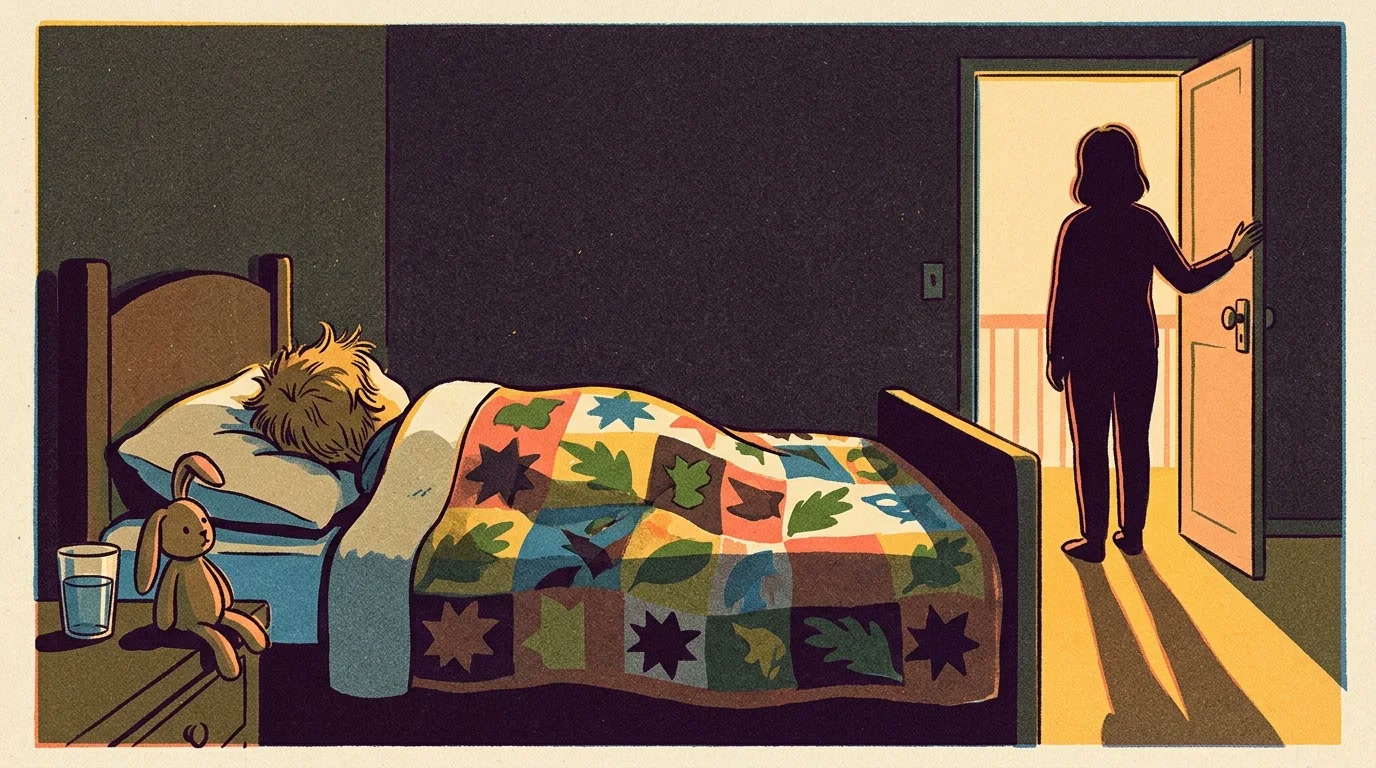
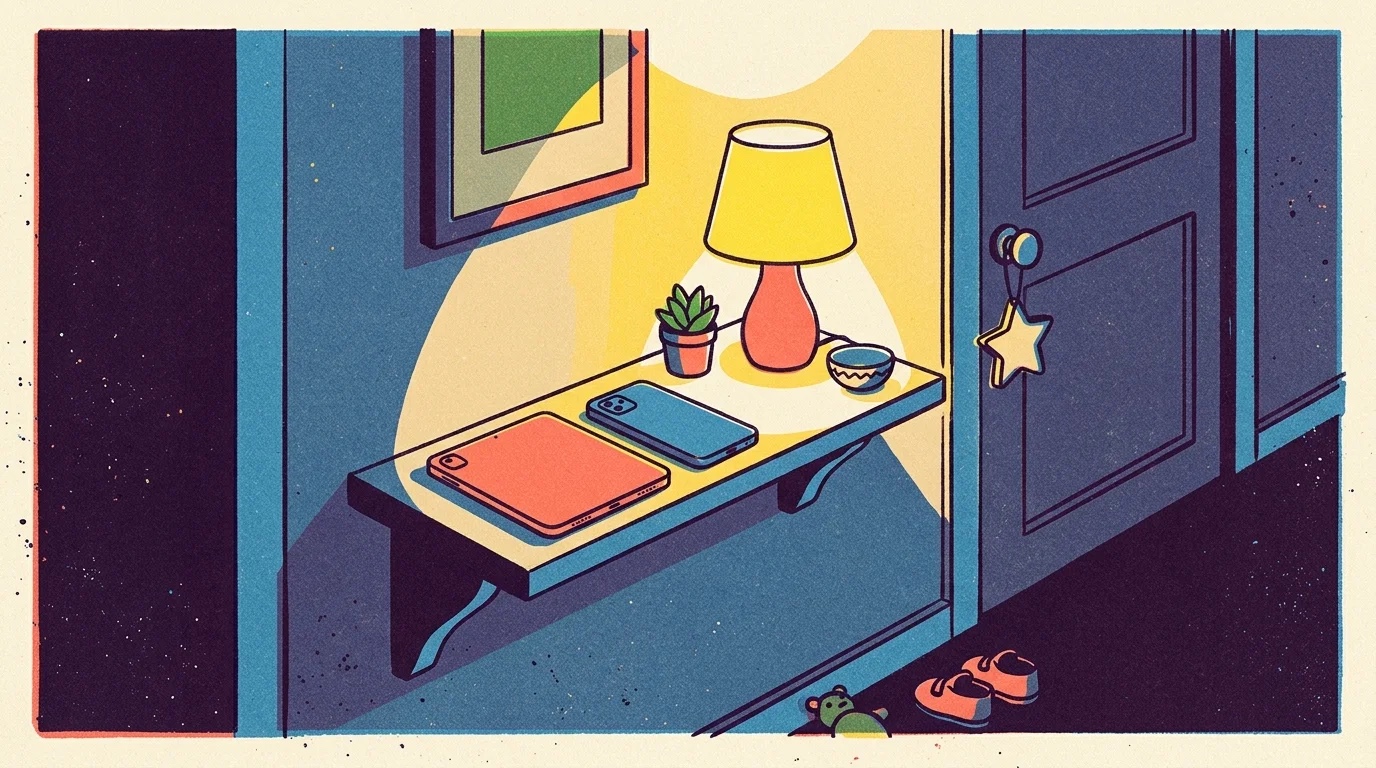
At twenty past nine on a school night in November, a seven-year-old is still awake. His mother has been up the stairs three times: once with water, once for a toy rabbit that had slipped behind the bed, and once to answer whether spiders sleep. On the fourth trip she stands in the doorway and hears herself say what her own mother used to say to her. "You need your sleep, or you won't grow." He lies down. She goes back down to the kitchen and wonders whether what she has just told him is true.
What she told him is an old saying. It used to be passed down the generations, and it may yet become a TikTok meme. People who repeat it mean that children do their growing at night, while they are asleep, and that a child who sleeps too little will not grow as tall as they should. If you have never heard it, you probably assume something simpler: that a child grows a little all the time, steadily during the day and at night, and that sleep has nothing special to do with it.
The mother in the kitchen has two questions. The first is whether children really do grow more while they are asleep than while they are awake. If her son does grow mainly in his sleep, then each late night gives him fewer hours in which to grow. So her second question is whether enough late nights would leave him shorter than he would otherwise have been.
Scientists have tried to answer both questions. On the first, they have found hints that the saying may be partly true. Growth hormone, which a child needs in order to grow taller, is released in a burst soon after a person falls asleep. And in one small American study, babies tended to grow in length during a spell of sleeping more than usual or in the few days after it. But as far as we can find, nobody has measured a child growing in their sleep.
On the second question, researchers in Switzerland and Japan compared how long children slept with how tall they grew. They found either no link or a difference of a few millimetres.
There is, though, a well-supported reason to make sure a child gets enough sleep, and it is to do with weight. A team at the University of Warwick pooled twenty studies that had followed children for at least a year. In those studies the children who slept less were about one and a half times as likely as the other children to become overweight or obese.
Do children actually grow in their sleep?
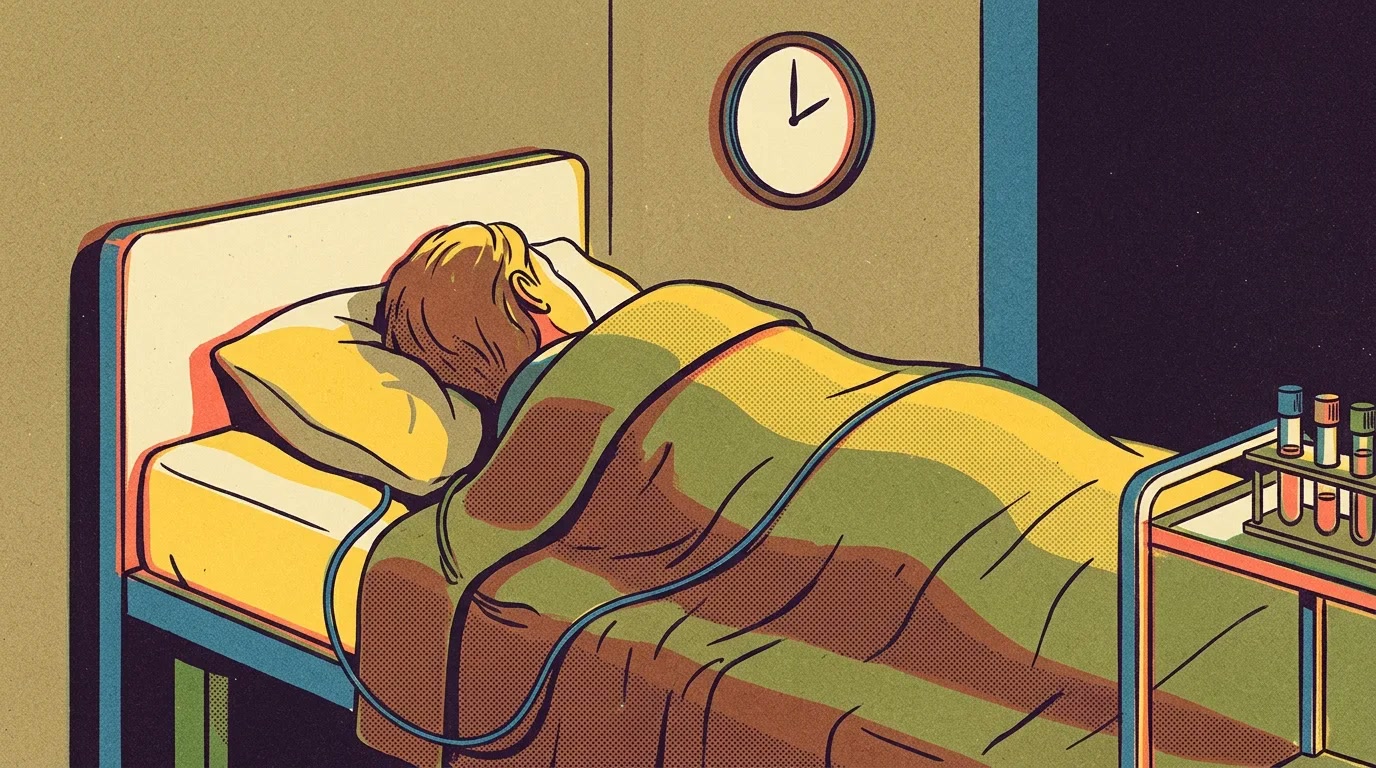
The saying is not baseless. In 1968 three researchers at Washington University in St Louis published a study in which eight healthy adults aged twenty to thirty slept at a clinical research centre. Each volunteer slept with a fine tube in a vein, so that the researchers could draw blood every thirty minutes through the night and measure the growth hormone in it.
In seven of the eight volunteers, a burst of the hormone began with the first deep sleep of the night, the stage of sleep in which a sleeper's brain waves are slow. On average the burst reached its highest point about seventy minutes after the volunteer fell asleep. None of the volunteers was a child. But a team who took blood from sleeping children in Boston, in a study published in 2022, cite an earlier study in which children, too, released bursts of growth hormone after they fell asleep, and they recorded such bursts in the children they studied themselves.
Knowing when the hormone is released does not tell us when a child's bones actually get longer. To find that out, somebody has to measure the growing itself, and very few researchers have tried.
Two researchers who tried to do that in people studied babies. Michelle Lampl, of the Department of Anthropology at Emory University, and her co-author Johnson had already published work on how babies grow. In a paper that came out in 2011, they reported on 23 healthy American babies. The parents kept a diary of every sleep their baby had, by day and by night, for between four and seventeen months. Over the same months Lampl measured the length of each baby, twice a week in most cases.
By Lampl and Johnson's account, a baby does not grow a little every day. In their measurements a baby stayed the same length for days at a time and was then found to be longer, and they call each of those jumps a growth spurt.
From the diaries they picked out the times when a baby slept far more than usual, on average four and a half hours a day more, for two days. In every one of the 21 babies Lampl measured at least twice a week, the researchers found the extra sleep and the growth spurts close together more often than they would have found them by chance. Lampl generally found the extra length either at the time of the extra sleep or within a few days after it.
Even so, Lampl and Johnson did not show that babies grow while they are asleep. They had only 21 babies to compare and no older children, and their only record of sleep was the parents' diary. Lampl usually measured each baby at the same time of day, and nobody measured a baby before a sleep and again after it. So the researchers cannot say at what hour the babies did their growing.
Lampl and Johnson also did not claim that the extra sleep caused the growth. They suggest that the same processes in the baby's body may lie behind both the growth and the sleepiness. If they are right, a growing baby is simply a sleepier baby, and more sleep would not make a baby grow any faster.
Another team measured bone itself, but they did it in lambs. In a study published in 2004, Noonan of the University of Wisconsin-Madison and colleagues implanted tiny sensors in growing lambs and recorded the length of a bone in the leg about every three minutes for three weeks or more. They found that at least 90 per cent of the lengthening happened while the lambs were lying down.
That figure cannot be directly extrapolated to children. A lamb that is lying down is not necessarily asleep, and the researchers studied no children. They only suggested that growth "may also occur in children during rest or sleep". Lampl, who measured the babies, is also one of the authors of the lamb study, so neither study is an independent check on the other.
The mother could try to settle the question herself, with a pencil mark on the door frame at her son's bedtime and another when he gets up the next morning. In 1978 Buckler, of the Department of Paediatrics and Child Health at the University of Leeds, reported that he had done much the same: 28 boys aged seven to fourteen had been measured in the evening and again the next morning. In the morning the boys were on average 0.6 centimetres taller. That extra height does not last.
In 1997 Voss and Bailey published a study from the Department of Child Health at Southampton General Hospital, in which 53 children at a Southampton school were measured at nine, eleven, one and three o'clock. By one o'clock the children were on average about half a centimetre shorter than they had been at nine, and between one and three they lost almost nothing more. A child's height goes down through the morning.
The explanation has been on record since at least 1935, when De Puky, of a university surgical clinic in Hungary, set it out in print. While a child is up and about, the weight of the body flattens the discs of cartilage between the bones of the spine, and the discs recover when the child lies down. De Puky had measured the height of 1,216 people in Hungary, but he did not look at the discs themselves. If her son's morning mark turned out to be the higher of the two, that would not show that he had grown in the night.
Two small studies from a long time ago came closer to the question. In a study published in 1978, Valk and van den Bosch measured a bone in the forearm of eleven boys at seven set times a day for three weeks. In a study published in 1983, Valk and two colleagues measured the lower leg of fourteen children at three set times a day, also for three weeks. In both studies the length went down between eight in the morning and noon, by 0.4 of a millimetre in the forearm and 0.6 in the leg. Yet by the end of the three weeks the forearm bone was 0.99 of a millimetre longer and the lower leg 1.08 millimetres longer. From those two results the researchers suggested that the growth happens during the night. These studies are far from conclusive. The researchers reported measurements taken at set times of the day. They did not report measuring any growth at night, and only suggested it. And these studies of just eleven boys and fourteen children took place more than forty years ago.
So back to the question of do children really grow in their sleep? Scientists have found hints that they may. They found those hints in a handful of small studies, and in none of those studies did anybody measure a child growing during sleep. For now, the idea that children do their growing at night is a reasonable guess that nobody has confirmed.
Does a child who loses sleep release less growth hormone?
Suppose the hints are right, and the burst of growth hormone that comes soon after a child falls asleep is part of how that child grows. The next thing to ask is whether a child who goes to bed late, or who sleeps badly, releases less of the hormone that night.
The St Louis team gave part of the answer in 1968. They kept four of their eight adult volunteers up for an extra three hours or so. Three of the four still had their burst of hormone, but only once they had fallen asleep, and so later in the night than usual. The burst also looked smaller than on their ordinary nights. The fourth was the one volunteer who had shown no burst on her ordinary nights either.
A child can also go to bed on time and sleep badly. In seven of the eight St Louis volunteers, the burst had begun with deep sleep. If deep sleep is what sets off the hormone, a child whose deep sleep is broken up should release less of it. As far as we can find, only one team has tested that idea by experiment in healthy children.
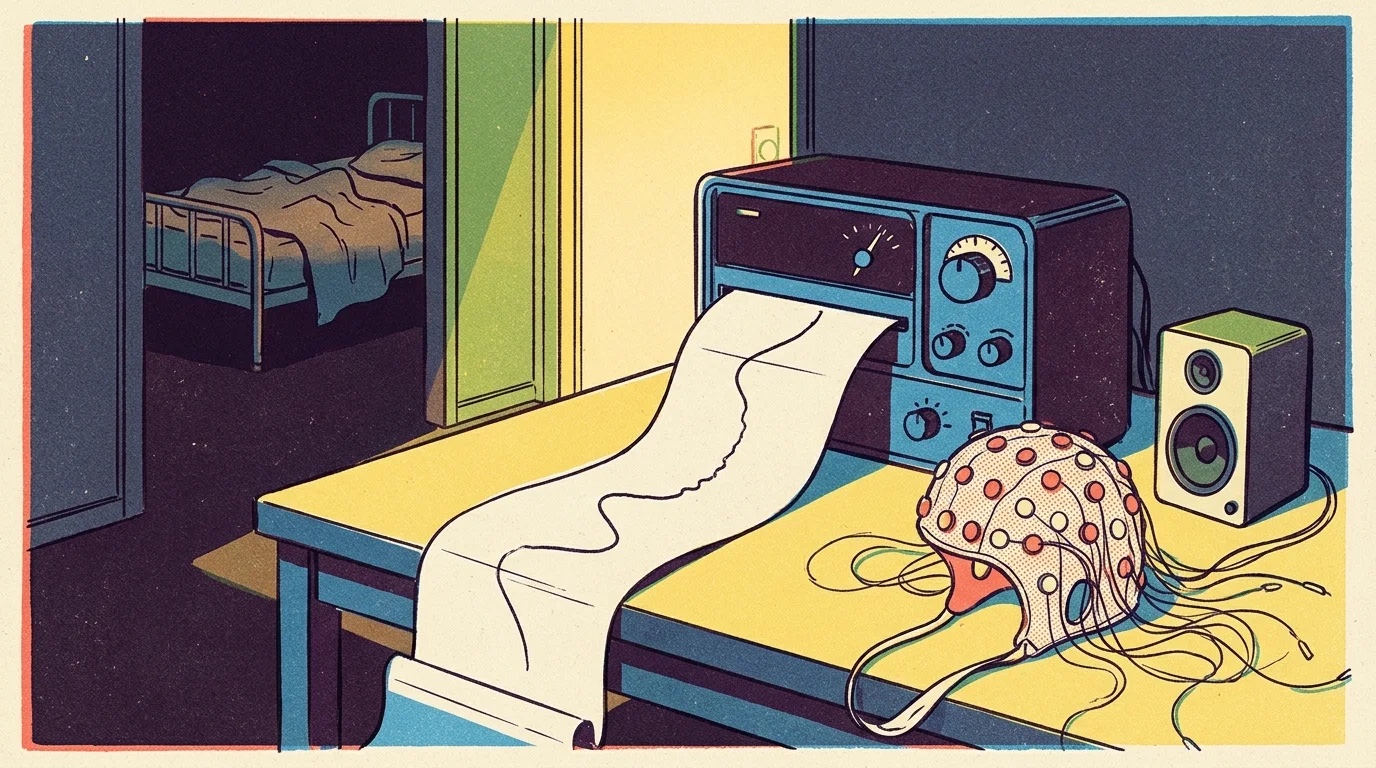
At Massachusetts General Hospital in Boston, Calvert and colleagues recruited fourteen healthy children in puberty, aged eleven to fourteen. Each child spent two nights at the hospital's research centre, and on both nights the team drew blood every ten minutes for eight hours. To break up the child's deep sleep on one of the two nights, chosen at random, the team played a three-second tone whenever the child's brain waves showed deep sleep. On average the tone sounded 78 times in the night.
On the night of the tones the children spent forty per cent less time in deep sleep than on the quiet night, and more time in lighter sleep. Yet the team could not detect any loss of growth hormone, in either the number of the bursts or their size. The children produced about seven bursts of hormone on the quiet night and about six on the night of the tones. With only fourteen children, the researchers could not tell that gap apart from chance, and they say they could have missed a small change.
Their experiment also lasted only a single night. The tones shortened each spell of deep sleep, but the children still had some. And nobody followed the children's growth. The Boston team add that a child whose sleep is broken night after night, by disturbed breathing for instance, is a different case that needs its own studies.
The Boston team measured growth hormone in the blood. But the mother in the kitchen wants to know something they did not measure, which is whether her son's sleep will affect how tall he grows.
Does more sleep make a child taller?
Other researchers have compared children's sleep with their height directly.
In Zurich, Jenni and three colleagues followed 305 children from the age of one to the age of ten, and published their findings in 2007. They measured each child's height and weight at least once a year. They did not record the children's sleep themselves, so they had to trust what they were told in interviews. At no age did they find a link between how long the children slept and the growth they had measured.
Two Japanese teams had far more children to work with, from the Japan Environment and Children's Study, a national study that follows children from birth. When the children were eighteen months old, their parents filled in a sleep diary for a single day. In a paper published in 2025, Kawai's team set the diaries of 52,140 of those toddlers against the children's height at three.
The toddlers who slept eleven and a half hours or more at night were a little more likely to be among the tallest quarter of children at three than the toddlers who slept nine hours or fewer: 28 in every 100 against 23. By our arithmetic from the published figures, the toddlers who slept longest were on average about a third of a centimetre taller at three than the toddlers who slept least. The team did not follow the children past three.
In 2026 the second Japanese team, Senoo and colleagues, published an analysis in which they sorted 49,208 toddlers from the same study by whether, at eighteen months, they fell asleep before or after ten at night. Over the following eighteen months the early-to-bed group grew 0.13 centimetres more than the late group, a little over a millimetre. The authors call the link small, and say their study cannot show that the earlier bedtime caused the extra growth. Nor can Kawai's team show that the longer sleep made their toddlers taller, because they too only observed the children and relied on the same diary of a single day.
There is, then, no good evidence that more sleep makes a healthy child taller. However, the mother in the kitchen still has a reason to care about her son's bedtime, because researchers have found a much firmer link between children's sleep and their weight.
Why enough sleep still matters: your child's weight
In 2018 Miller and colleagues at Warwick Medical School pooled the results of 42 earlier studies. In each of those studies, researchers had recorded how long a group of children slept and had then followed the same children for at least a year to see how their weight changed. The twenty studies that counted which children became overweight or obese covered 75,499 children in nine countries.
The children the Warwick team call short sleepers were compared with all the children who slept longer or, in some of the studies, with one group chosen for the comparison. In those twenty studies, the children who slept less were 1.58 times as likely as the other children to become overweight or obese. What does that figure mean for a child like the boy upstairs? Imagine that ten in every hundred of the other children became overweight during a study. Then about sixteen in every hundred of the children who slept less would have become overweight.
The Warwick team found a link. From a link alone, we cannot tell whether the short sleep caused the weight gain. In most of the 42 studies, the researchers measured sleep by asking parents or children. And because they only observed families, they cannot rule out that something else makes children both sleep less and gain weight. The Warwick authors themselves say two things in the same paper. In one place they write that their analysis "supports a causal relationship between short sleep and subsequent weight gain and obesity in children". In their conclusion they call short sleep "a risk factor or marker" of obesity, which allows that it may only accompany whatever does cause the weight gain.
Children in Scotland show the same link between short sleep and weight. Gale, Cecil and Williams at the universities of St Andrews and Edinburgh analysed 4,157 children from the Growing Up in Scotland study and reported what they found in 2026. Trained staff measured the children's height and weight every two years from eight to fourteen. Parents or carers reported how long the children slept at eight, and the children reported their own sleep at fourteen.
The children who slept less at eight tended to be heavier for their height at twelve. The link also ran the other way: the children who were heavier for their height at eight tended to sleep less at fourteen. The authors call the links "modest but meaningful". Not every family took part in every round of measurements: of the 4,157 children, 2,674 had a sleep figure at eight and 2,351 at fourteen. These figures cannot show which comes first, the short sleep or the extra weight.
Whichever comes first, the mother will still want to know how much sleep is enough for a seven-year-old.
How much sleep a child needs, and what helps a child sleep longer
In 2016 the American Academy of Sleep Medicine brought together thirteen sleep specialists, who reviewed 864 published articles and agreed a range of hours for each age from four months to eighteen years. For children of six to twelve, the panel recommends nine to twelve hours of sleep in every twenty-four. If the boy upstairs drops off at half past nine and gets up at seven, he will have slept nine and a half hours, which is inside the range for his age but near the bottom of it.
For younger children the panel's hours include naps. It recommends twelve to sixteen hours for babies of four to twelve months, eleven to fourteen for one- and two-year-olds, and ten to thirteen for children of three to five. For teenagers it recommends eight to ten.
The panel agreed the ranges by judgement and did not test them in a trial. The panel itself says that children vary.
What can the mother do if she wants her son to sleep longer? In a review published in 2022, Magee's team at St George's, University of London pooled 45 randomised trials covering 13,539 healthy children aged one to eighteen. In each trial, children, or whole classes or schools, were assigned by chance either to a programme meant to lengthen their sleep or to a comparison group. None of the programmes used drugs, and some had wider aims than lengthening sleep. On average the children in the programmes slept 10.5 minutes a night longer than the others.
In three of the trials, the programme included an earlier bedtime. The children in those three slept 47 minutes a night longer than the children in their comparison groups. Magee's team caution that they had only three such trials, and that in trials lasting six months or longer the children gained less than two minutes a night.
Hale and Williamson, in a 2026 commentary in the journal Pediatrics, accept that most successful programmes lengthen a child's sleep by less than twenty minutes a night. They argue that even ten or fifteen minutes more sleep is worth having. By their count it adds up to four to seven more hours of sleep a month, and they say that a small change may be easier for a family to keep up. They suggest small steps: getting into bed ten or fifteen minutes earlier, and turning devices off fifteen to twenty minutes before bedtime or keeping them out of the bedroom altogether. They add that a regular schedule matters too.
What the mother in the kitchen can do
The mother in the kitchen had told her son that he needs his sleep or he won't grow. He does need his sleep. Nobody has shown that he will grow any less if he goes short of it.
If she wants a reason to get him to sleep on time, his weight is a better one. Children who sleep less are more likely to become overweight, although researchers have not yet settled whether the lost sleep is the cause.
Tomorrow she can start the trip upstairs ten or fifteen minutes earlier, keep to that time through the week, and keep devices out of his room. If he sleeps badly night after night, or his breathing is disturbed while he sleeps, she should ask the GP about it.
To see what difference it makes, she can print our two-week sleep diary and fill in a row each morning.
And she can go on telling him that he needs his sleep, because he does. She can leave out the part about not growing.
Conflicts of interest
For transparency, these are the conflicts of interest that researchers reported. In the 2022 Boston study of growth hormone, by Calvert and colleagues, one of the authors declared consulting work for three sleep foundations, for a company called Circadian Therapeutics, for the drug company Sanofi-Genzyme and for Yale University Press. The same author declared that her partner owns Chronsulting. On the American Academy of Sleep Medicine's 2016 panel, two of the thirteen members declared links to the drug company Jazz Pharmaceuticals, one as a consultant and one through research funding. The second of them also declared consulting work for Medscape.
Translating underreported science into evidence-based clarity. We provide a studious sanctuary of peer-reviewed research to help you move beyond mainstream advice with empathy and confidence.
Most children begin to wonder about Santa at around seven. Researchers have asked children and adults how they found out, how they felt and for how long, and their answers give a parent more to go on than the magic of Christmas.
Most parents think lifting weights is dangerous for children. Twenty years of paediatric consensus disagree, and the reason has more to do with the nervous system than with muscle.
Parents are told that writing by hand is vital for their child's growing brain, and that screens are eroding it. We sort the viral headlines from the solid evidence, and find the real benefit belongs to one group above all: children still learning their letters.
Your child's fussiness for food is mostly inherited, and most of the things parents try in order to fix it make it worse. Find out why young children refuse food, why it is rarely a parent's fault, and the unglamorous method that genuinely changes how they eat.