When should a child begin to train, and why the old fear was wrong
Most parents think lifting weights is dangerous for children. Twenty years of paediatric consensus disagree, and the reason has more to do with the nervous system than with muscle.
Most parents think lifting weights is dangerous for children. Twenty years of paediatric consensus disagree, and the reason has more to do with the nervous system than with muscle.

Parents are told that writing by hand is vital for their child's growing brain, and that screens are eroding it. We sort the viral headlines from the solid evidence, and find the real benefit belongs to one group above all: children still learning their letters.
Your child's fussiness for food is mostly inherited, and most of the things parents try in order to fix it make it worse. Find out why young children refuse food, why it is rarely a parent's fault, and the unglamorous method that genuinely changes how they eat.
Most parents think lifting weights is dangerous for children. Twenty years of paediatric consensus disagree, and the reason has more to do with the nervous system than with muscle.

Most parents assume weights are off-limits until the teenage years. Two decades of paediatric consensus say otherwise, and the reason has more to do with the nervous system than with muscle.
Ask a room of parents whether their eight-year-old should lift weights and you will watch faces change. Someone will mention growth plates. Someone else will have heard that lifting stunts your height. A third will say, reasonably enough, that children get plenty of exercise running about, so why complicate it.
The instinct behind all three responses is protective and entirely understandable. It is also, according to the last twenty years of paediatric sports medicine, mistaken.
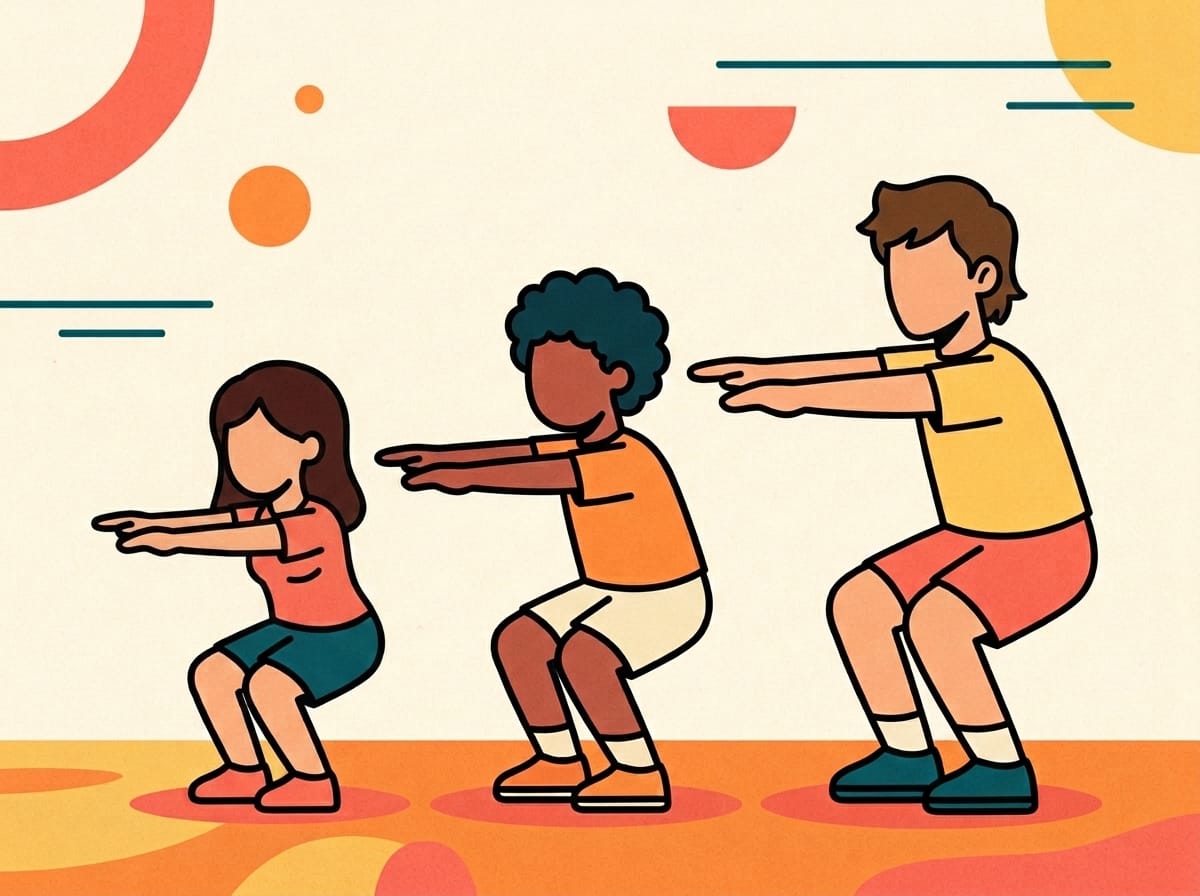
Supervised strength work is safe for children. It does not stunt growth. It can begin far earlier than most parents imagine, and the American Academy of Paediatrics puts the starting point at around five years old, in the form of one-legged hops and frog jumps rather than barbells. The 2014 International Consensus on youth resistance training, endorsed by professional bodies across sports medicine, exercise science and paediatrics, found no evidence that appropriately supervised training damages the growing skeleton. What changes in a trained child is mostly not the size of the muscle at all. It is how well the brain talks to it.
The growth-plate anxiety has a real origin, which is part of why it has proved so durable.
Growth plates are the zones of cartilage near the ends of long bones where lengthening happens. They are genuinely more vulnerable than mature bone, and injuries to them do occur. What the older literature recorded, though, were mostly case reports: individual children hurt while lifting weights that were far too heavy, with poor technique, and without an adult supervising. Researchers reviewing this evidence have consistently found that most such injuries were accidental, involving dropped equipment or loads a child had no business attempting.
Those are arguments against unsupervised children messing about with heavy weights. They are not arguments against structured, progressive training, and paediatric bodies have been saying so with increasing firmness since the 1980s.
The American Academy of Paediatrics clinical report of 2020, a revision of its 2008 policy statement and reaffirmed in 2024, reviewed the risks alongside the benefits and concluded that resistance training belongs in the physical activity of children and adolescents generally, not just young athletes. Its authors made a point worth repeating to any parent picturing a school gym full of teenagers under barbells: resistance training covers a great deal more than weightlifting.
Here is the part that tends to surprise people.
When an adult trains and gets stronger, a good deal of that strength arrives with visible bulk. Muscle fibres thicken. When a pre-pubertal child trains and gets stronger, and they do get considerably stronger, the same thing largely does not happen. Children can improve their strength substantially over a couple of months of well-designed training while showing very little change in muscle size.
The gains come instead from the nervous system. A child's brain and spinal cord learn to recruit more motor units, to fire them in better sequence, and to coordinate the muscles around a joint so they stop working against each other. Researchers describe these as neural adaptations. In plain terms, the child is not building a bigger engine so much as learning to use the engine they have.
This matters for two reasons. It explains why a child can get meaningfully stronger without anyone worrying about them bulking up. And it reframes what strength training in childhood actually is, which is a form of motor learning. The child is acquiring competence at moving their own body under control.
That competence has a name in the literature, physical literacy, and it turns out to be protective. Reviews of injury prevention in young people have found that structured resistance training substantially lowers the risk of activity-related injury, particularly among children who specialise early in one sport and among those who are largely inactive and therefore under-prepared for the sport they do play.
For most of the last two decades, official guidance has treated strength work as a useful addition to children's activity. Get sixty minutes of moderate to vigorous activity a day, the advice runs, and include some muscle-strengthening activity a couple of times a week.
In May 2025, a group of exercise scientists writing in Sports Medicine argued that this framing has it backwards. Their paper, titled with some deliberate provocation, contends that the era of resistance training as a primary form of physical activity for youth has arrived, and that guidelines treating it as supplementary need reconsidering.
Their case rests on breadth. Resistance training improves muscular fitness, which nobody disputes. But the authors marshal evidence that it also delivers benefits long assumed to belong to aerobic exercise, including improved cardiorespiratory fitness, reduced body fat and better insulin sensitivity. On bone, they note that jumping-based training improves bone mineral density while some aerobic activities, swimming among them, do relatively little for the skeleton.
This is a Current Opinion piece rather than a new trial, and it should be read as an argument being made rather than a question settled. National guidelines have not changed. But it is a serious argument from serious researchers, and it signals a direction of travel that parents may as well know about now.
There is a further finding worth mentioning because it is so unexpected. A 2023 systematic review and meta-analysis in Sports Medicine examined whether resistance training affects how children do at school, pooling evidence across fifty-three studies. It found a small positive effect on cognitive function, academic performance and on-task classroom behaviour. The effect was modest and the authors called it preliminary. Still, of all the reasons a parent might have considered strength work, better behaviour in a maths lesson was probably not among them.
The practical guidance across the consensus statements is more relaxed than the word "training" suggests.
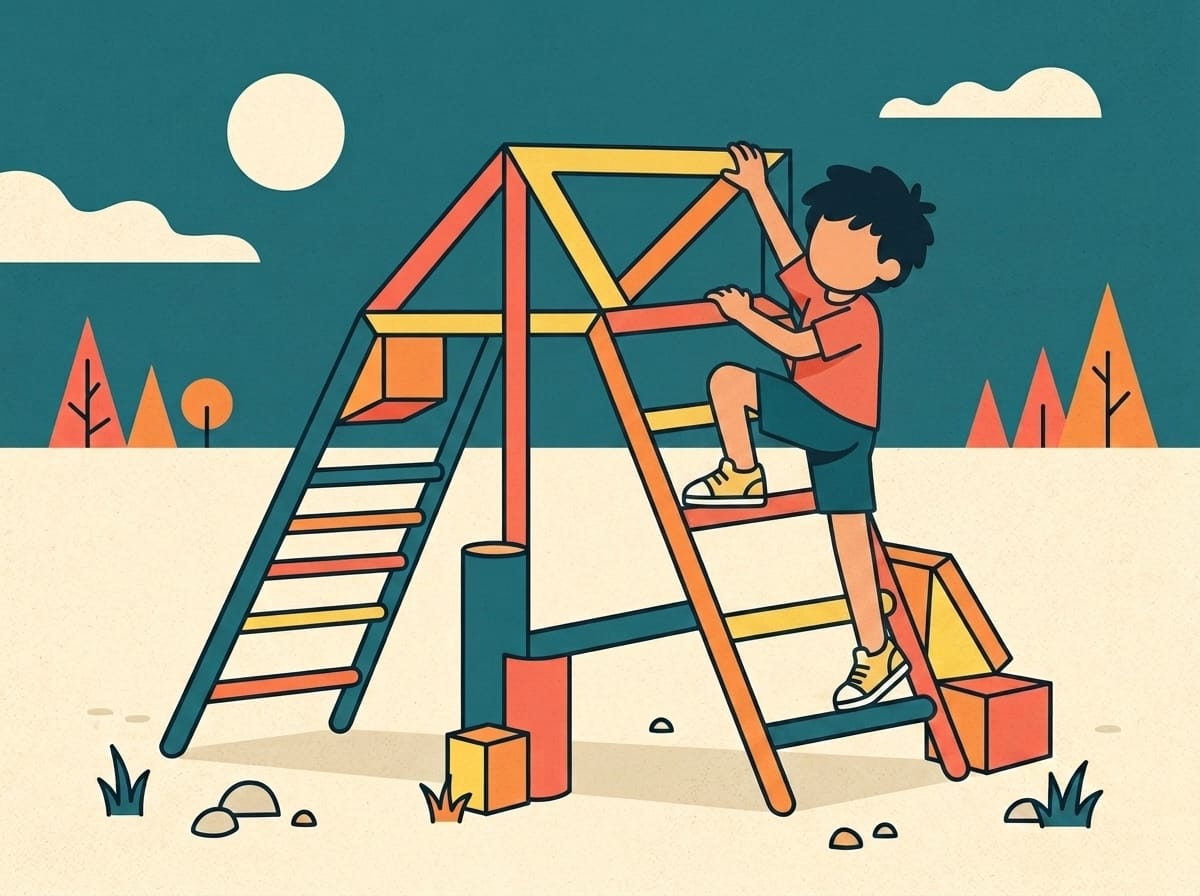
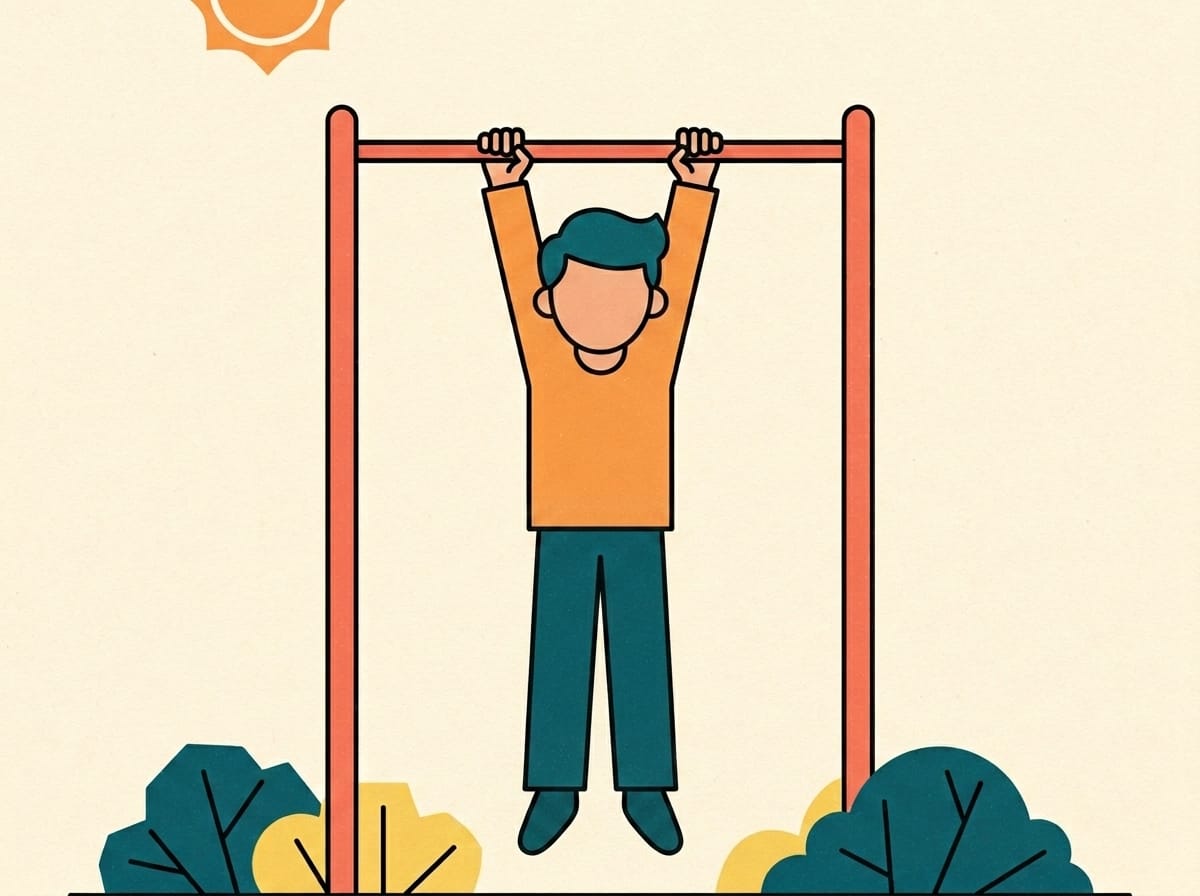
Start with the child's own body weight. Hops, jumps, squats, press-ups against a wall or the floor, climbing, hanging from a bar. A five-year-old doing frog jumps in the garden is doing resistance training, whatever anyone chooses to call it. Resistance bands, medicine balls and, later, free weights and machines all have a place, but none of them is the entry point.
Prioritise technique over load, always. This is the single point on which every position statement agrees and the one that separates safe training from the case reports that created the myth. A child should be able to perform a movement well before they perform it with weight, and adding load to a poor movement pattern is how people get hurt.

Supervision matters more than programming. The evidence that youth resistance training is safe is evidence about *supervised* training delivered by someone who knows what they are doing. Unsupervised access to a weights room is a different proposition entirely.
Two or three sessions a week on non-consecutive days is the usual recommendation, with modest volume to begin with and gradual progression. Reviews of school-based programmes have found measurable improvements from interventions lasting six to twelve weeks, which is to say a school term.
Keep competitive maximal lifting out of it. The consensus documents draw a clear line between resistance training and the competitive sports of powerlifting and weightlifting, and continue to counsel against maximal one-repetition attempts before a child is skeletally mature.
And make it enjoyable, which is not a soft point. A Spanish cluster-randomised trial published in 2026 built strength training into primary school PE lessons for 254 eleven-year-olds and added a gamified version with an app, avatars and points. The children in the gamified group improved more on press-ups, standing long jump and single-leg hop than those doing the same training without it, and reported enjoying it more. Whatever gets a child to keep doing the thing is part of the intervention.
The reason this story matters is not that every child needs to be strong in some competitive sense. It is that muscular fitness in young people has been declining for decades across many countries, and that the children least likely to be doing any strength work are the ones who would benefit most, because they are the ones turning up to play sport with bodies unprepared for it.
A parent who reads the consensus documents comes away with something more useful than permission. Children who never develop basic movement competence early tend not to acquire it later, and they carry that gap into every activity they might have enjoyed. The eight-year-old doing frog jumps in the garden is not training for anything. They are keeping their options open.
2014, Lloyd RS, Faigenbaum AD, Stone MH, et al., Position statement on youth resistance training: the 2014 International Consensus, British Journal of Sports Medicine
2020, Stricker PR, Faigenbaum AD, McCambridge TM, AAP Council on Sports Medicine and Fitness, Resistance Training for Children and Adolescents, Pediatrics
2025, Chaabene H, Ramirez-Campillo R, Moran J, et al., The Era of Resistance Training as a Primary Form of Physical Activity for Physical Fitness and Health in Youth Has Come, Sports Medicine
2023, Robinson K, Riley N, Owen K, et al., Effects of Resistance Training on Academic Outcomes in School-Aged Youth: A Systematic Review and Meta-Analysis, Sports Medicine
2010, Faigenbaum AD, Myer GD, Resistance training among young athletes: safety, efficacy and injury prevention effects, British Journal of Sports Medicine
2017, Zwolski C, Quatman-Yates C, Paterno MV, Resistance Training in Youth: Laying the Foundation for Injury Prevention and Physical Literacy, Sports Health
2026, Strength and Gamification in Physical Education: effects of a gamified paediatric resistance training programme on muscular fitness, enjoyment and motivation in schoolchildren, Psychology of Sport and Exercise

Parents are told that writing by hand is vital for their child's growing brain, and that screens are eroding it. We sort the viral headlines from the solid evidence, and find the real benefit belongs to one group above all: children still learning their letters.

Your child's fussiness for food is mostly inherited, and most of the things parents try in order to fix it make it worse. Find out why young children refuse food, why it is rarely a parent's fault, and the unglamorous method that genuinely changes how they eat.

Most of what shapes a young life turns out to be joyful and ordinary. A major new study shows what teenagers themselves treasure, and why the way they answer can tell you how they are really doing.

Chronic pain in children is more common than being left-handed. And adults are surprisingly bad at reading how much pain a child is in. This is what all parents should know.
