When should a child begin to train, and why the old fear was wrong
Most parents think lifting weights is dangerous for children. Twenty years of paediatric consensus disagree, and the reason has more to do with the nervous system than with muscle.
Most parents think lifting weights is dangerous for children. Twenty years of paediatric consensus disagree, and the reason has more to do with the nervous system than with muscle.

Parents are told that writing by hand is vital for their child's growing brain, and that screens are eroding it. We sort the viral headlines from the solid evidence, and find the real benefit belongs to one group above all: children still learning their letters.
Your child's fussiness for food is mostly inherited, and most of the things parents try in order to fix it make it worse. Find out why young children refuse food, why it is rarely a parent's fault, and the unglamorous method that genuinely changes how they eat.
We think answering a quick email while in the company of our children is a harmless compromise. But to our teens, it looks like we are rejecting them. New science reveals how our after hours work impacts adolescent mental health.

It is a scene that plays out in living rooms across the world every evening. The dinner dishes are cleared. The television is perhaps on, or homework is being done at the kitchen table. You are sitting on the sofa, physically present, perhaps even within arm’s reach of your teenager.
But your phone is in your hand. You are not scrolling social media; you are replying to a "quick" email from a colleague or approving a document that came in late. You are being responsible. You are providing for your family. To you, this moment is a necessary compromise - a way to manage adult responsibilities while still being home.
But a wave of new research suggests that to your adolescent, this moment looks very different.
For the last decade, we have worried intensely about what screens are doing to our children. We police their gaming hours and fret over their social media feeds. However, emerging science from 2023 through 2026 indicates we need to turn the lens around. We need to look at what our screen use is doing to them.
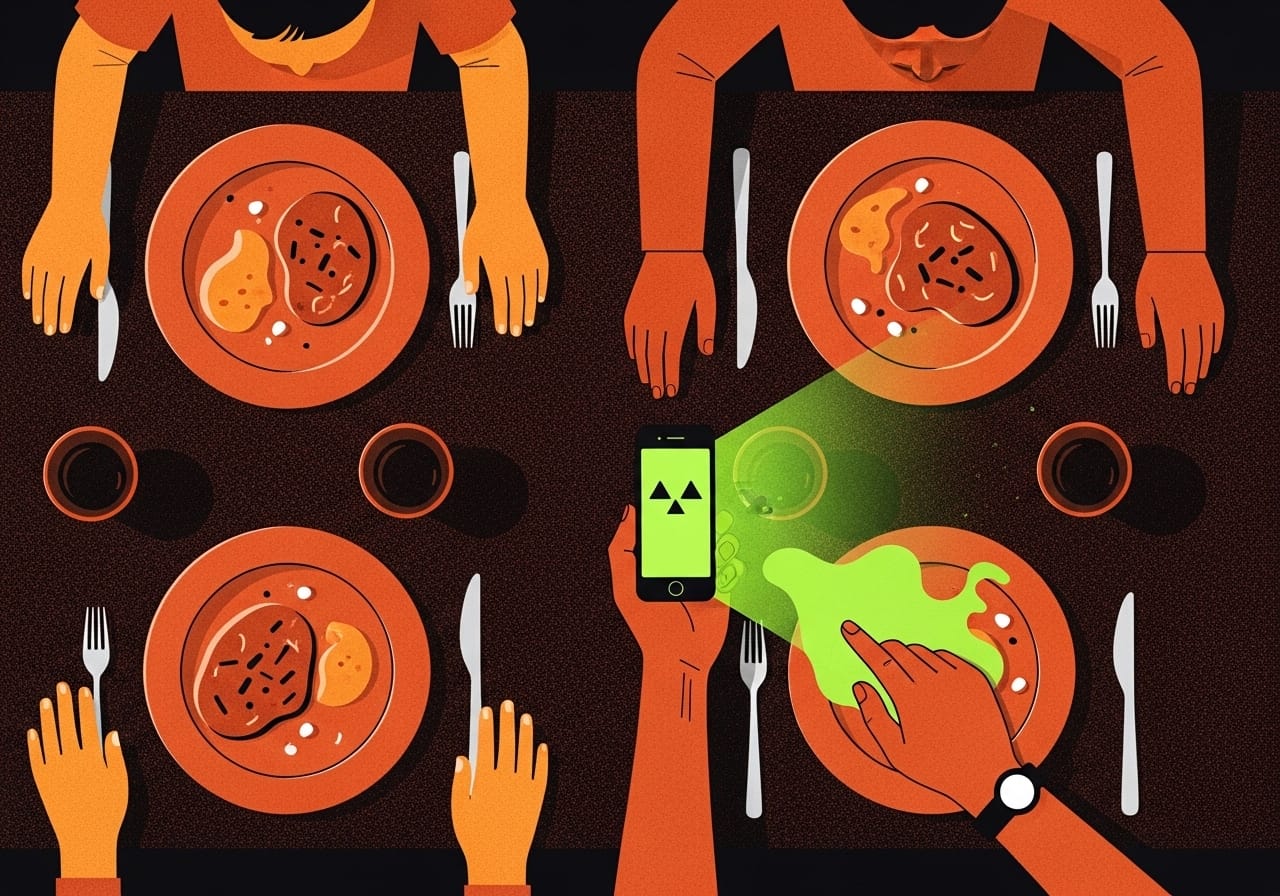
The "After-Hours" Paradox
In January 2026, a pivotal study published by C. Rodrigue, Wendy Nilsen, and colleagues in Family Relations specifically examined "after-hours telework." This term refers to the professional tasks we slip into our evenings and weekends - the text messages, the emails, the Slack notifications that interrupt our family time.
The study found a direct correlation: when parents frequently engaged in work during these "off" hours, their adolescents reported lower psychological adjustment - which in real terms often manifests as higher levels of anxiety, increased depressive symptoms, and a distinct withdrawal from social interactions.
This finding creates a tension that many of us feel. We assume that being physically in the room with our children is the most important factor. If we are sitting there, surely that is better than being at the office?
We spoke to Wendy Nilsen, the study’s lead author and a research professor specializing in work-family dynamics, to understand this better. She explained that while their data does not directly compare physical presence against total absence (like staying late at the office), the issue stems from the confusion the behavior creates.
"The pattern we observe is consistent with the idea that ambiguity matters," Nilsen told The Inquisitive Parent. "Being physically present, but inconsistently responsive may be experienced as a form of relational unpredictability."

This is the crux of the problem. If a parent is at the office, the boundary is clear: "Mom is at work." The separation is physical and understood. But when a parent is on the sofa, body angled toward the child but eyes locked on a screen, the signal becomes confused.
"Adolescents may have difficulty interpreting availability signals when a parent is intermittently attentive," Nilsen says. This state of "availability ambiguity" can be mentally taxing for a teenager. They are left wondering: Are they ignoring me? Is my story boring? Is that email more important than I am?
Nilsen notes that clear absence - where expectations are unambiguous - might actually be easier for a child to process than the "intermittently attentive" parent who is physically there but mentally drifting away.
The Mechanism of "Technoference"
This interruption of interpersonal communication by digital devices has a name in the scientific literature: technoference.
A review published in 2023 by D. Dixon and colleagues led by Bangor University and Public Health Wales highlighted that this is not just about hurt feelings. It is about the fundamental mechanics of the parent-child relationship. The study showed that high levels of parental technoference are associated with poorer mental health outcomes in adolescents, including increased rates of depression and anxiety.

The mechanism here is likely rooted in our species' evolutionary history. Humans rely on "serve and return" interactions with each other to build security. When an infant coos, the parent smiles back. When a teenager makes a joke, the parent laughs. These micro-interactions release oxytocin and dopamine, reinforcing the bond.
Technoference disrupts this loop. When a teenager initiates a "serve" - perhaps a comment about a video game or a complaint about a teacher - and the parent pauses for three seconds to finish reading a text before responding, the pattern breaks.
Nilsen suggests that the flexibility of modern work, while often sold as a benefit, complicates this further. We might gain the ability to be home for dinner, which is a wonderful logistical win. But if the cost of that flexibility is that we must "sacrifice time afterwards" to catch up, we lose the emotional availability that should follow the meal.
"While most parents report that work flexibility solves some time-based work-family conflict," Nilsen explains, referring to upcoming qualitative research, "several experience that it does not provide work-family balance in the sense that they are not able to be emotionally available for their family members during the evening as they have to keep up with work."
The Vulnerable Teenager
One of the most common misconceptions parents hold is that teenagers, with their closed doors and noise-canceling headphones, don't really need us to be hovering. We often assume they are resilient to our distraction because they seem so intent on ignoring us anyway.
However, the data suggests otherwise. Adolescence is a period of heightened sensitivity to social cues.
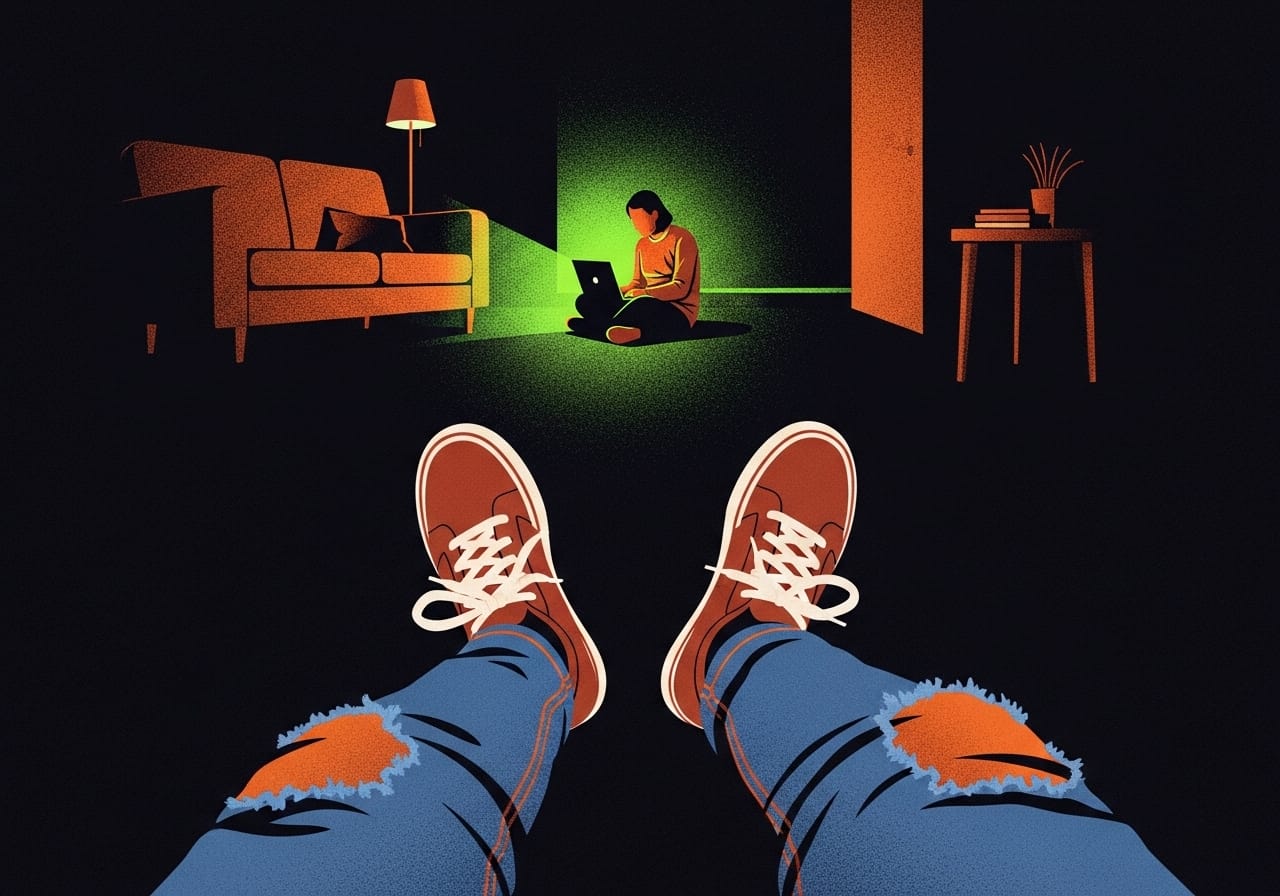
"Although adolescents often seek autonomy and privacy, they remain highly sensitive to parental availability and emotional attunement," Nilsen explains. "Developmentally, adolescence is marked by heightened sensitivity to interpersonal/social evaluation... particularly from attachment figures."
Because their brains are still calibrating their sense of worth and belonging, they look primarily to caregivers to set that baseline. When we offer "subtle forms of disengagement," such as divided attention or delayed responsiveness, Nilsen warns that this "may be interpreted as rejection or lack of support, even when adolescents do not overtly seek interaction."
Essentially, your teenager might be sitting on the other end of the sofa, apparently engrossed in their own phone. But their radar is on. They are monitoring your availability. If you are physically there but psychologically tethered to your office, they register that distance as a withdrawal of support.
Nilsen also points out a trap many of us fall into: we are more prone to working in front of adolescents than toddlers because they seem "less vulnerable." But this assumption backfires. They notice. And because they are developmentally primed to detect social rejection, they may feel it more acutely than we realize.
The "Responsible Parent" Trap
There is a second, practical layer to this dynamic. Most of us are not scrolling Instagram; we are working. We tell ourselves that this is "responsible" behavior. We are demonstrating a strong work ethic. We are paying the mortgage.
Does the teenager distinguish between a parent who is "phubbing" (snubbing them for a phone) to watch a funny video versus one who is handling a work crisis?
According to Nilsen, likely not.
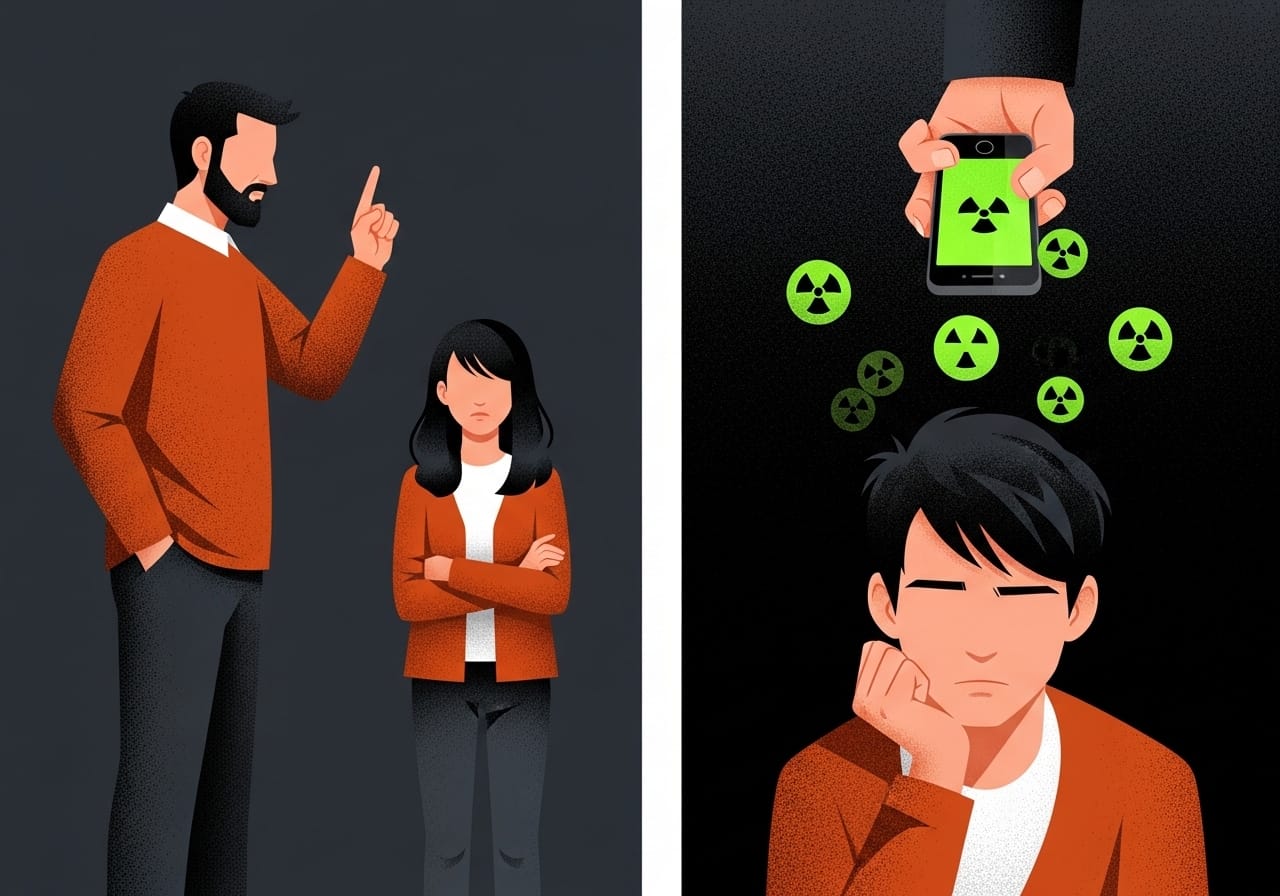
"Our study measured adolescents’ perceptions of parental behavior... not parental motives," she says. "The associations we observed suggest that adolescents respond primarily to experienced availability and interaction quality, rather than to the perceived legitimacy of the work."
This is a hard pill for hardworking parents to swallow. We want our intent to matter. We want credit for the fact that we are working for the family. But to the adolescent brain, the outcome is binary: support is either available or it is not.
"Whether the parent was working for family-related reasons or was simply distracted was not differentiated in the data," Nilsen notes, "but the psychological correlates were tied to reduced support... regardless of presumed intent."
Furthermore, a study published in 2025 by S. Geurts and colleagues in the Journal of Medical Internet Research suggests that our behavior undermines our authority. The researchers found that "restrictive mediation" - setting strict limits on our kids' screen time - is far less effective when the adolescent perceives the parent as being distracted by their own device.
Adolescents are acutely sensitive to hypocrisy. If we demand they look us in the eye while we continuously glance at our wrists to check smart notifications, our authority decreases. The inconsistency between what we say and what we do creates cognitive dissonance. They are less likely to internalize healthy digital habits if they do not see them modeled.
In fact, further research published in 2025 by B. Liu and colleagues links parental phubbing directly to so-called “maladaptive cognition" in teens. When children feel neglected by distracted parents, they often turn to their own devices for comfort. It becomes a closed loop: the parent works on their phone to manage stress, the child feels ignored and retreats into their phone to manage anxiety, and the distance between them grows.
Regaining Control: Clarity and Bursts
It is important to acknowledge the context. We do not answer emails at 8:00 PM because we do not care about our children. We answer them because the boundaries of the workplace have dissolved. We carry our offices in our pockets. We operate under a fear that if we are not "always on," we will be viewed as less productive.
However, understanding this research allows us to regain control. Once we recognize that our "quiet" work is actually a loud signal to our children, we can choose to change the signal.
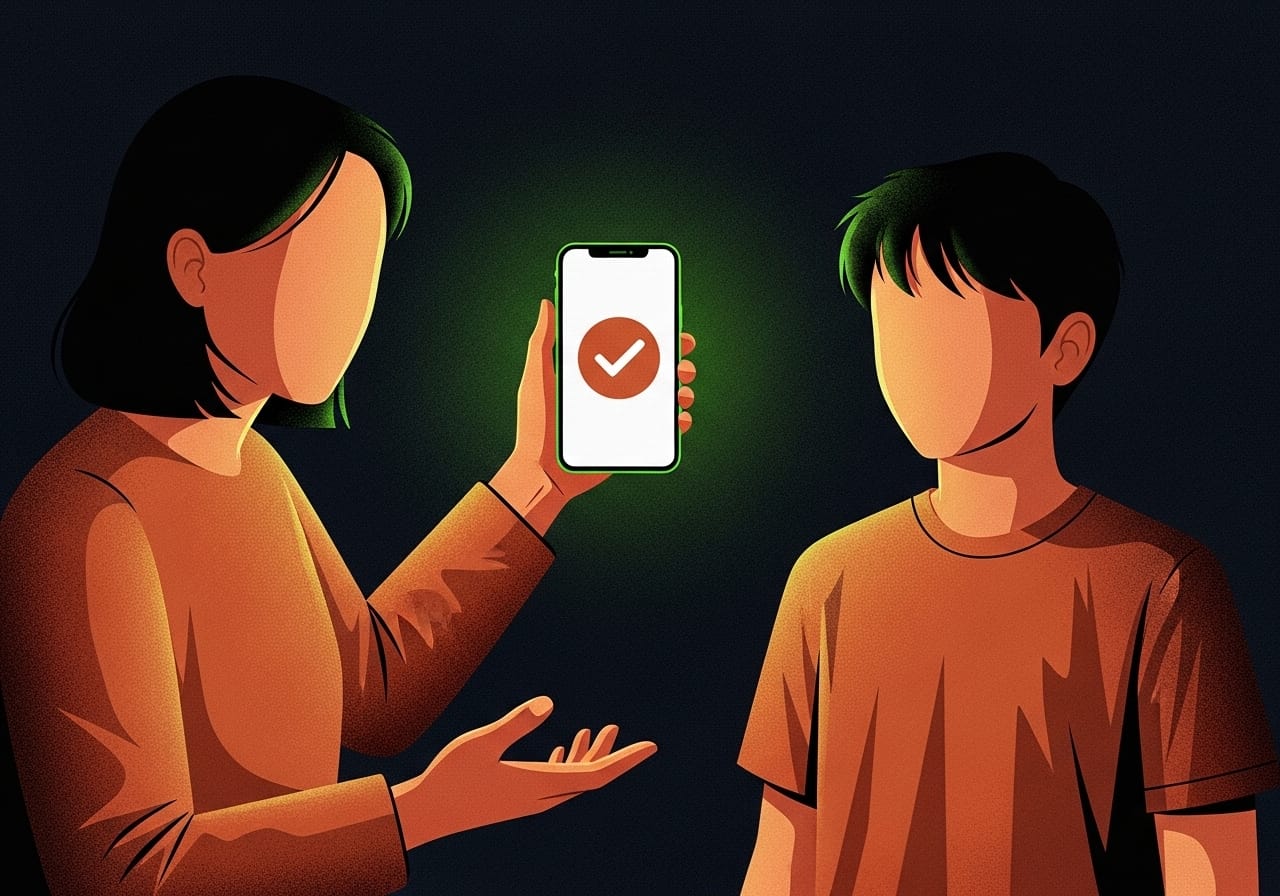
We asked Nilsen about practical strategies. While her specific study didn't test interventions, she notes that findings from organizational psychology support the idea of "communicative tactics" that make work more predictable.
"Practices which reduce ambiguity and protect periods of genuine availability may be more protective than those that simply normalize the presence of work stress in the home," Nilsen advises.
Here are three steps to reduce the ambiguity:
1. Narrate Your Screen Time
One of the biggest issues is the confusion. To a teenager, you looking at a spreadsheet looks exactly the same as you looking at a game. They assume you are "checking out".
Fix this by narrating your intent. Say out loud: "I have to send this one email to my boss, and then I am putting the phone away so I can hear about your day".
This defines the boundary. As Nilsen suggests, "making your work more predictable for your surroundings might be a successful tactic." It tells the child that the distraction is finite and has a purpose, rather than being an open-ended state of disinterest.
2. The Power of "Bursts"
If you must work in the evening, try to do it in defined bursts rather than a constant state of distraction. Instead of keeping your phone on the arm of the chair and checking it every ten minutes, set a timer.
"I am going to work for 20 minutes in the other room".
Go, do the work fully, and then return fully. Nilsen’s research highlights that the negative effects are driven by the "spillover" of work into interactions. By physically separating the work, you stop the spillover. Complete presence for 30 minutes is often more valuable to a child’s nervous system than three hours of "half-presence".
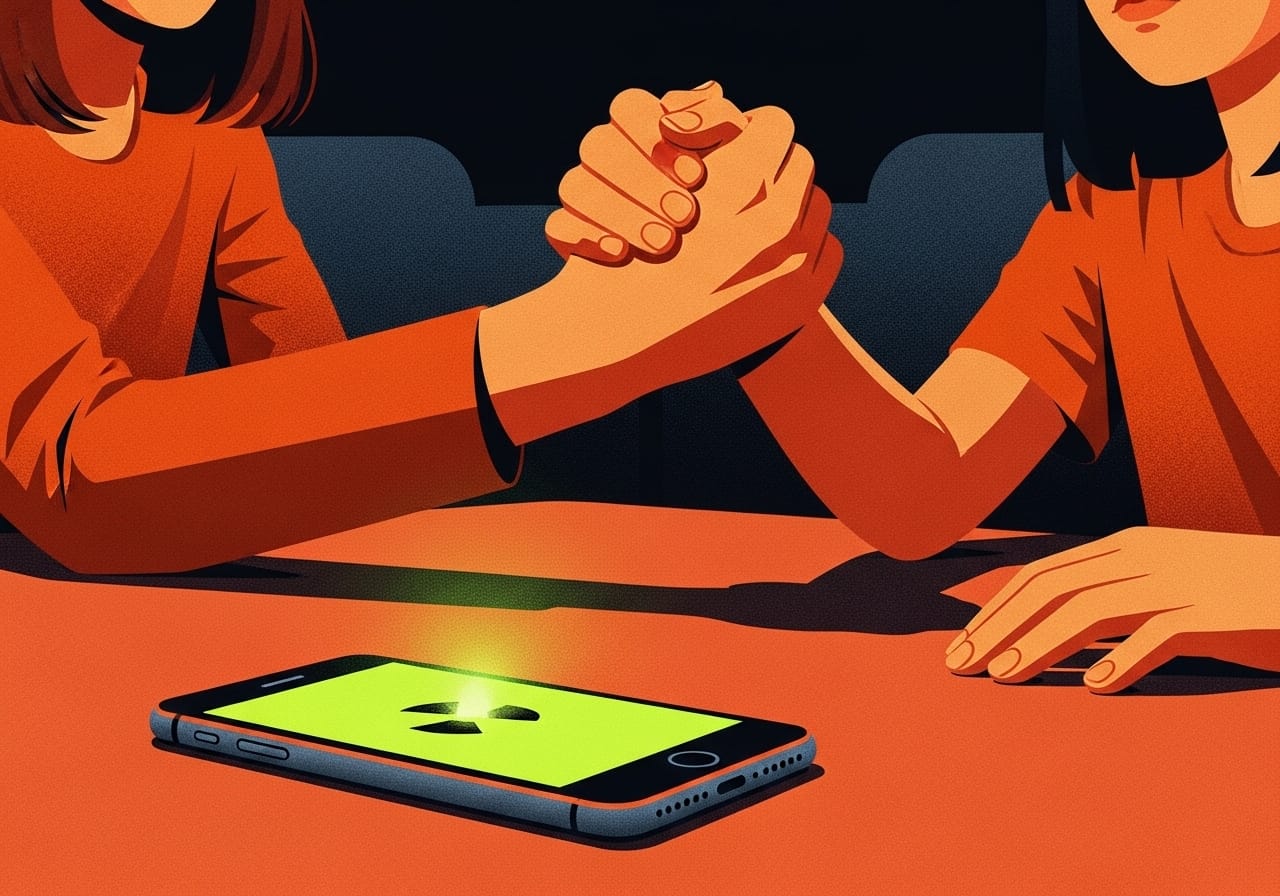
3. The Physical "Do Not Disturb"
Create physical cues that signal availability. When you are done with the task, physically place the phone face down, or better yet, in a different room.
This is a biological signal to your child’s attachment system. It says: "The competition for my attention is gone. You have the floor". You may be surprised by how quickly they open up in these moments.
Our teenagers are growing up in a world that is noisy, demanding, and often overwhelming. They look to us not just for logistic support, but for a sense of grounding. They need to know that they matter more than the notification on the screen.
The research from 2023 to 2026 is clear: our attention is essential. It is as vital to their development as food or sleep. When we fracture that attention, they feel it.
But the reverse is also true. When we choose, even for a short window, to be completely present - to look them in the eye and let the email wait - we build a foundation of security that will last them a lifetime. We cannot be perfect. But we can be present. And often, that is enough.
2026, Rodrigue, C., Nilsen, W., & Dion, J., Parental after-hours telework and adolescent psychological adjustment: Insights from adolescents' perspective, Family Relations
2025, Zhang, J., et al., Parental Technoference and Child Problematic Media Use: Meta-Analysis, Journal of Medical Internet Research
2025, Geurts, S., et al., Parental Internet-Specific Rules and the Onset of Adolescents' Problematic Social Media Use, Journal of Medical Internet Research
2025, Liu, B., et al., Why can parents' phubbing affect mobile phone addiction? Perspective of the I-PACE model, Frontiers in Psychiatry
2023, Dixon, D., et al., Parental technoference and adolescents' mental health and violent behaviour: a scoping review, BMC Public Health

Most of what shapes a young life turns out to be joyful and ordinary. A major new study shows what teenagers themselves treasure, and why the way they answer can tell you how they are really doing.

Chronic pain in children is more common than being left-handed. And adults are surprisingly bad at reading how much pain a child is in. This is what all parents should know.


When a child receives a mental health diagnosis, whether anxiety, ADHD, depression, or something else, parents often want to know how it will impact their schooling. A new study provides some answers.

A major new study has scanned the brains of nearly 10,000 children and tracked them for three years. Its findings reveal which children are most at risk of loneliness, and what can be done to prevent it.