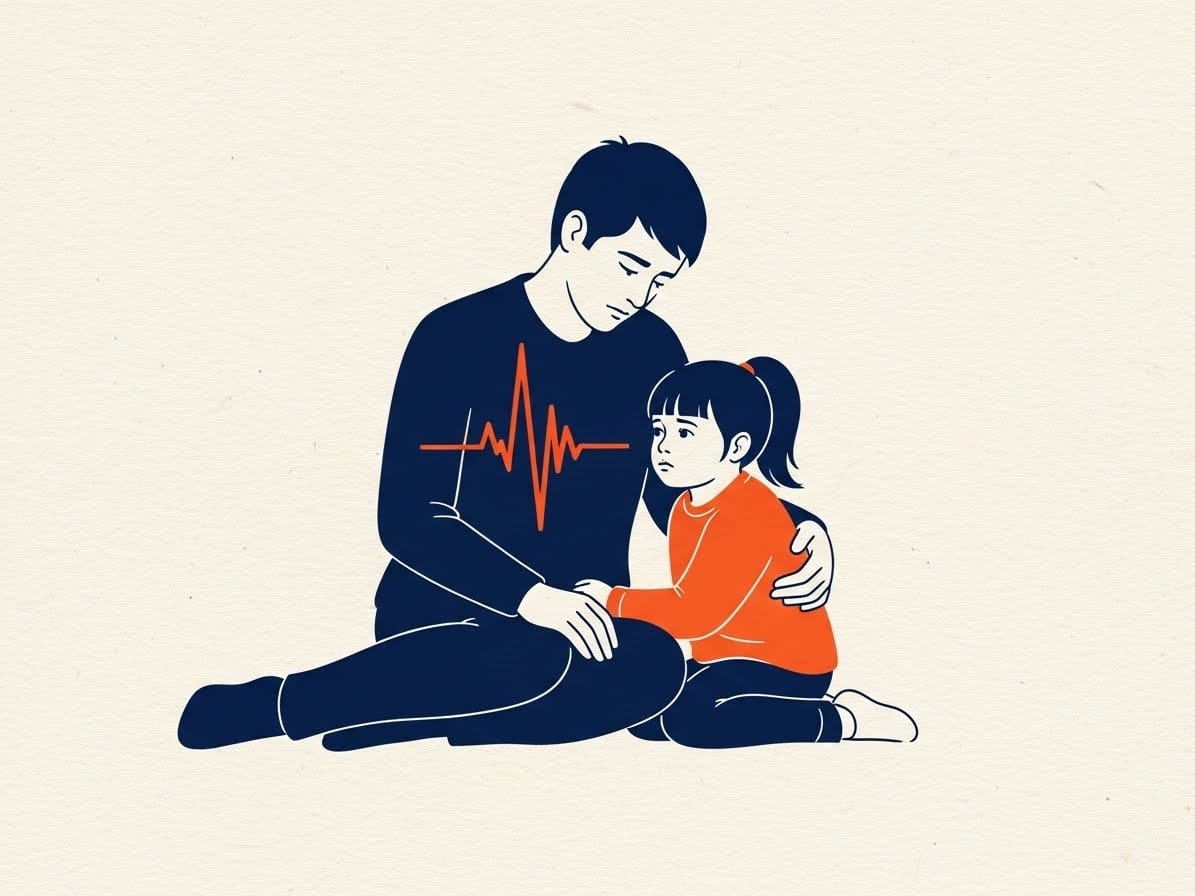
New research reveals that bullying can actually cause post-traumatic stress in children. If your child can’t 'bounce back' from being bullied, they aren't weak. We explain the biology of the hurt, and how to help them heal.
Why is your daughter so stressed? New research shows high-achieving girls often link their self-worth to their grades. Constant notifications from school apps mean they can never truly switch off. Learn how to help her value herself beyond the screen and give her permission to be human.
It can feel like wasting money on 'fake' items. But for your child, digital assets and skins are a ticket to social belonging. We explain the science behind the screen and how to handle the requests.
The Gentle Parenting Burnout: Why 2026 Is The Year We Bring Back Boundaries, And Realize That A "No" Is The Safest Thing A Child Can Hear
Modern parenting pressure to stay 'perfectly calm' can lead to a measurable state of burnout. We examine the latest research explaining why hiding your feelings backfires, and how 'sturdy leadership' offers a clearer path to well-being.
For some of us, it is a toddler screaming because you gave them the blue cup instead of the red one. For others, it is a fourteen-year-old rolling their eyes at a curfew you are too exhausted to enforce. They know they can out-negotiate you.
You validate their feelings. You get down on their level or sit on the edge of their bed. You explain. You empathize. You offer choices. They scream louder or argue harder. You take a deep breath, suppress your rising panic, and begin the negotiation.
For the better part of a decade, the "Gentle Parenting" movement promised us a revolution. It suggested that if we were empathetic enough, patient enough, and validated every single feeling, we could raise a generation free from the scars of the past. It was a beautiful promise.
But as we begin 2026, the data is telling a different, harder story. If you have spent years negotiating with a three-year-old or trying to be your teenager’s "safe space" at the expense of your own authority, you are likely experiencing a specific, measurable form of exhaustion.
This isn’t just tiredness. It is the cost of a failed experiment in emotional suppression. To keep our sanity, and to actually help our children, we need to move past the idea that being "gentle" means being endless.
The "Perfectly Calm" Trap
We often assume that the goal of modern parenting is to never lose our cool. But trying to be the "perfectly regulated" parent, the one who never raises their voice, is biologically dishonest.
In late 2024, a landmark study in PLOS ONE was the first to empirically scrutinize this "Gentle Parenting" model. The researchers, led by Dr. Anne Pezalla at Macalester College, found that for many parents, the pressure to maintain a facade of constant calm drove feelings of "uncertainty and burnout" in over one-third of the group.
The study revealed a troubling paradox. Parents who were most committed to being "gentle" often reported lower feelings of self-efficacy. They were trying so hard to be perfect that they felt like failures.
Worse, the biology suggests this suppression backfires. A 2025 study in Communications Psychology found that when parents suppress their genuine emotions to perform a script, it creates a physiological "mismatch." Children are wired to detect this. They sense the difference between the calm voice and the spiking heart rate. This makes them feel less safe, not more.
Join us to read how "gentleness" slips into permissiveness, why teenagers specifically crave stronger boundaries, and the practical "Sturdy Leader" scripts you can use for children of every age.
Read the full story
Join The Inquisitive Parent, the magazine for parents seeking reliable, objective evidence to navigate the modern world with confidence.
New research reveals that bullying can actually cause post-traumatic stress in children. If your child can’t 'bounce back' from being bullied, they aren't weak. We explain the biology of the hurt, and how to help them heal.
Why is your daughter so stressed? New research shows high-achieving girls often link their self-worth to their grades. Constant notifications from school apps mean they can never truly switch off. Learn how to help her value herself beyond the screen and give her permission to be human.
It can feel like wasting money on 'fake' items. But for your child, digital assets and skins are a ticket to social belonging. We explain the science behind the screen and how to handle the requests.
75% of parents want school phone bans, yet teens still scroll for over an hour during class. Why? The answer is uncomfortable: they are mirroring us. We explore the new data on why reclaiming their focus starts with us putting our own phones down.