When should a child begin to train, and why the old fear was wrong
Most parents think lifting weights is dangerous for children. Twenty years of paediatric consensus disagree, and the reason has more to do with the nervous system than with muscle.
Most parents think lifting weights is dangerous for children. Twenty years of paediatric consensus disagree, and the reason has more to do with the nervous system than with muscle.

Parents are told that writing by hand is vital for their child's growing brain, and that screens are eroding it. We sort the viral headlines from the solid evidence, and find the real benefit belongs to one group above all: children still learning their letters.
Your child's fussiness for food is mostly inherited, and most of the things parents try in order to fix it make it worse. Find out why young children refuse food, why it is rarely a parent's fault, and the unglamorous method that genuinely changes how they eat.
75% of parents want school phone bans, yet teens still scroll for over an hour during class. Why? The answer is uncomfortable: they are mirroring us. We explore the new data on why reclaiming their focus starts with us putting our own phones down.


For many of us, the walk to the school gates feels very different from the one our own parents took thirty years ago. Back then, once the heavy school doors closed, our mothers and fathers essentially waved us off into a different world until mid-afternoon. We were out of reach, and for the most part, that was okay.
Today, that boundary has dissolved. We send a "good luck" text to our daughter ten minutes before her maths test. Our sons send us a photo of a soggy school lunch to complain about the cafeteria. We see their updates on our screens throughout the day, and they see ours. We are constantly connected to our children in a way that feels supportive but also relentless.
For the inquisitive parent, this raises a difficult question. If we are all so tired of the intrusion, why is it so hard to stop? A major new set of studies released this month offers a fascinating, if slightly uncomfortable, answer. It suggests that while we are united in wanting the phones gone, we might be the reason they are staying.
This editorial is part of our launch issue. While many of our reports are reserved for members, we are making this free to all to help spark this essential conversation. If you value empathetic, evidence-based parenting journalism, please consider subscribing to The Inquisitive Parent.
If you have ever felt nervous about suggesting a stricter phone policy at a PTA meeting, fearing you might be the "strict" parent, you can breathe a sigh of relief. You are not an outlier. You are part of a massive global majority.
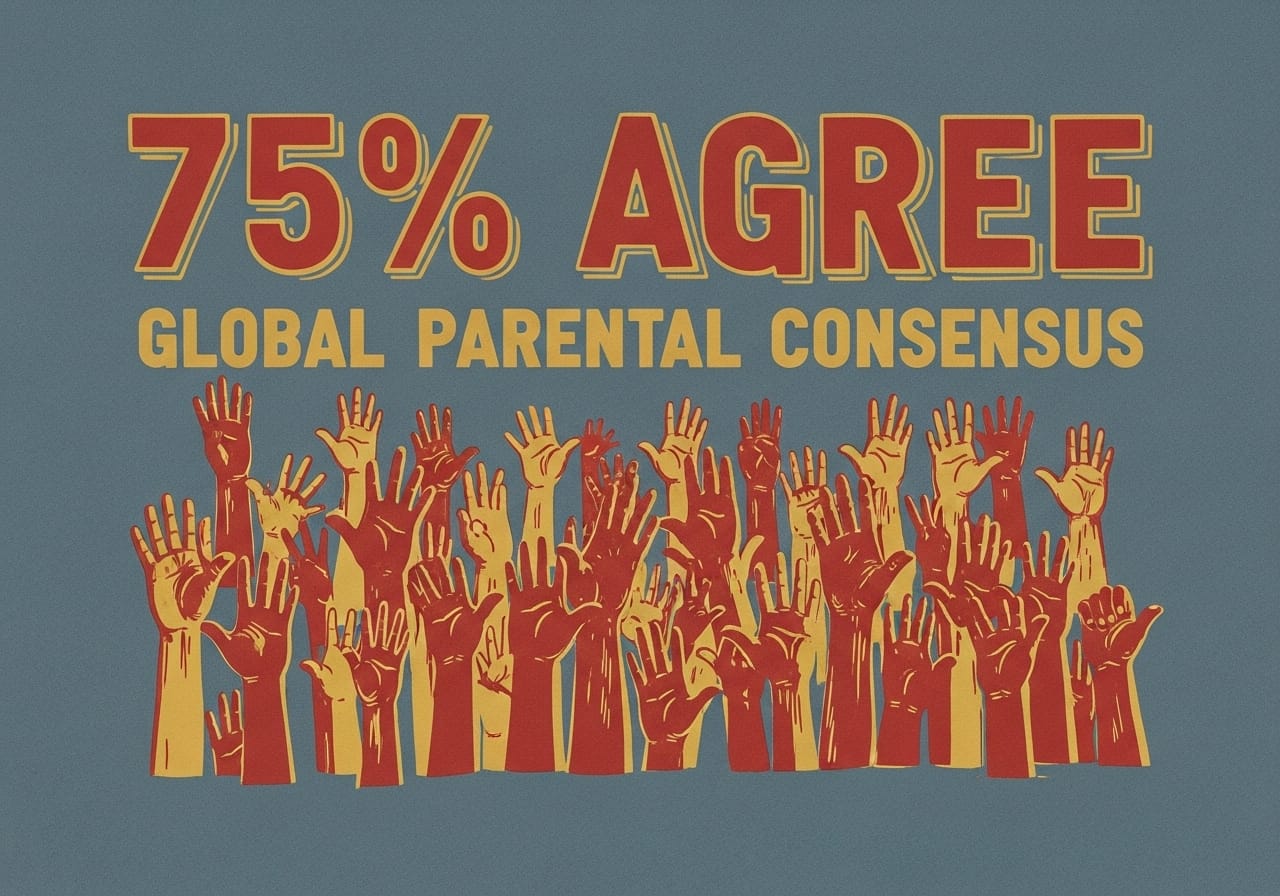
A study published last month in JAMA Pediatrics by Dimitri Christakis and colleagues has provided the most comprehensive look yet at our attitudes toward technology in the classroom. Researchers surveyed over 35,000 adults across 35 different countries to understand exactly how parents are feeling.
The consensus is striking. More than 75% of adults worldwide now support a total ban on smartphones during the school day. In the United States, 71.3% of parents favor the move. In the UK, where government guidance has tightened, the data is even more robust. Figures from the Children's Commissioner show that nearly 99.8% of primary schools and 90% of secondary schools have already implemented policies to restrict phone use.
On paper, the policy seems settled. Parents want bans, and schools have enacted them. But the data reveals a curious contradiction. If the bans are in place, why does it feel like nothing has changed?

The Reality in the Classroom
The answer lies in a second study led by Dr. Jason Nagata at the University of California, San Francisco. Unlike previous research that relied on asking teenagers how much they used their phones – which is notoriously unreliable – this study used passive monitoring software to track actual usage.
The results, published alongside the Christakis study, are sobering. Despite the widespread existence of school bans, teenagers are still spending an average of 1.16 hours on their phones during school hours.
Crucially, this isn't time spent calling home for emergencies. The data shows the vast majority of this time is spent on social media apps like TikTok and Instagram.
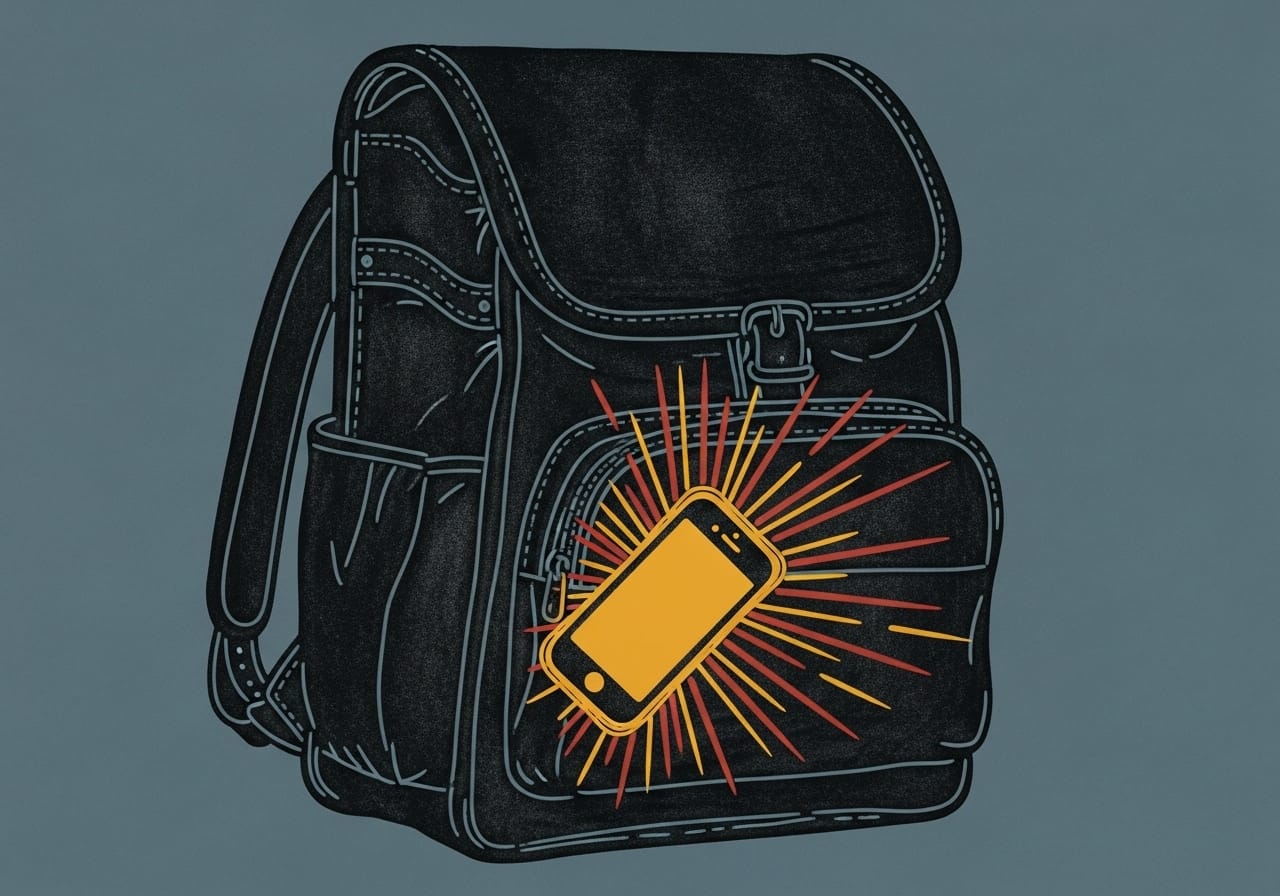
Why is this happening? The research suggests that "phone in bag" policies – the most common form of ban – are simply too loose to work. When a phone is merely zipped away rather than locked away, the vibration of a notification is often too tempting to ignore. Teenagers are effectively checking their screens in short bursts between classes, in bathrooms, or behind textbooks. The policy exists, but the physical boundary does not.
The Uncomfortable Truth
However, there is a third dimension to this story that is often harder for us to accept. While we look at school policies and teenage willpower, we often overlook the role of the primary influence in the child's life: ourselves.
We tend to view our children's phone habits as a separate issue from our own, but evidence increasingly suggests they are mirrored behaviors. Foundation work in this field has long established that "technoference" – intrusions of technology into parent-child time – creates a cycle of disconnection. In short, children use their phones to peruse social media largely because they see us, their parents, doing the exact same thing.
New research from 2025 reinforces that this is a learned behavior. A major review found that through "observation and imitation," children internalize their parents' digital habits, validating the constant need to be connected. Crucially, this mirroring has a cost: a separate 2025 study found that higher parental phone use during family time directly correlated with increased anger, sadness, and poorer emotional regulation in their children.
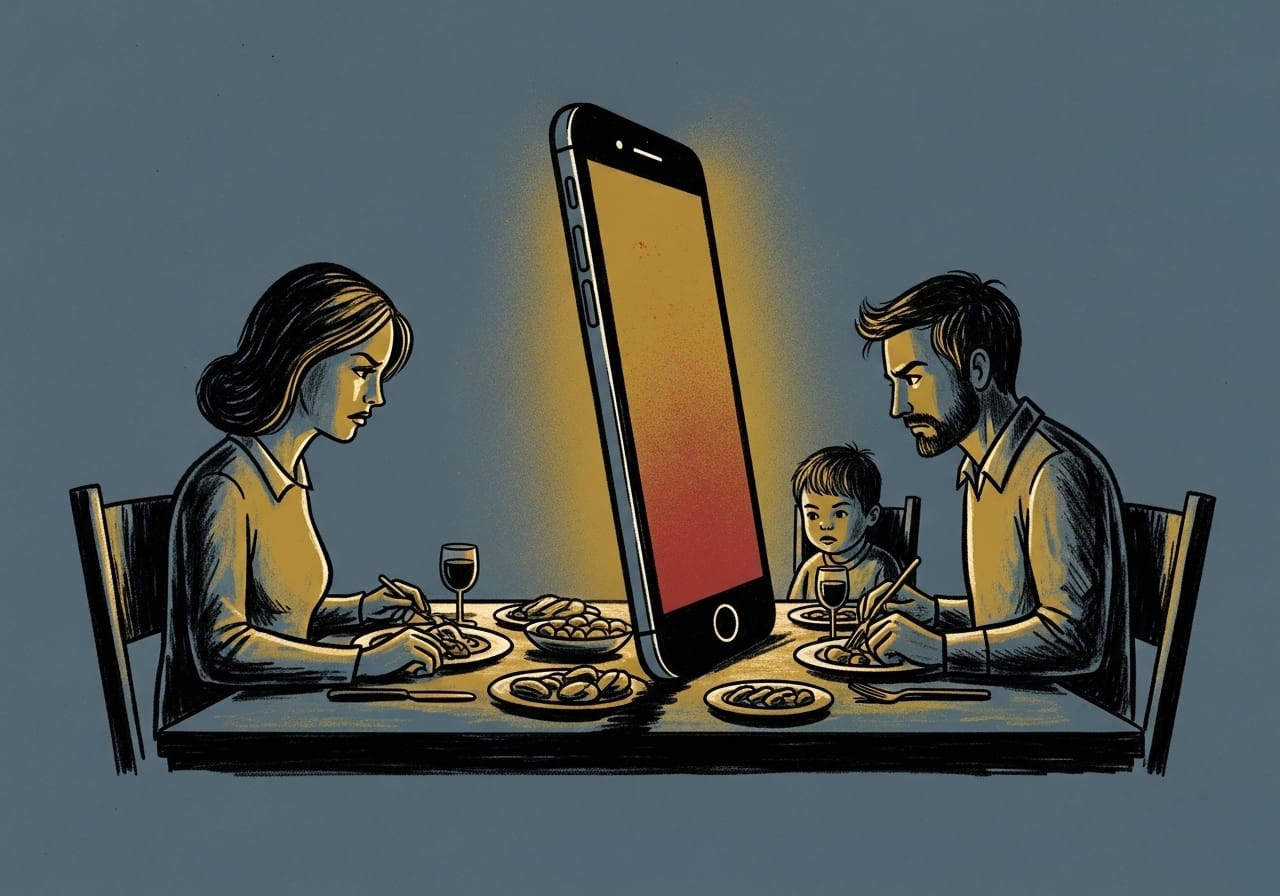
When we send that text during the school day, or when we check our own emails the moment we wake up, we validate the constant connection we are trying to police. We are effectively telling our children that being reachable is more important than being present. The habit is mutual. We reach out to them just as often as they reach out to us.
A Shared Responsibility
The science is telling us that the quiet focus we want at school cannot be achieved by rules alone.
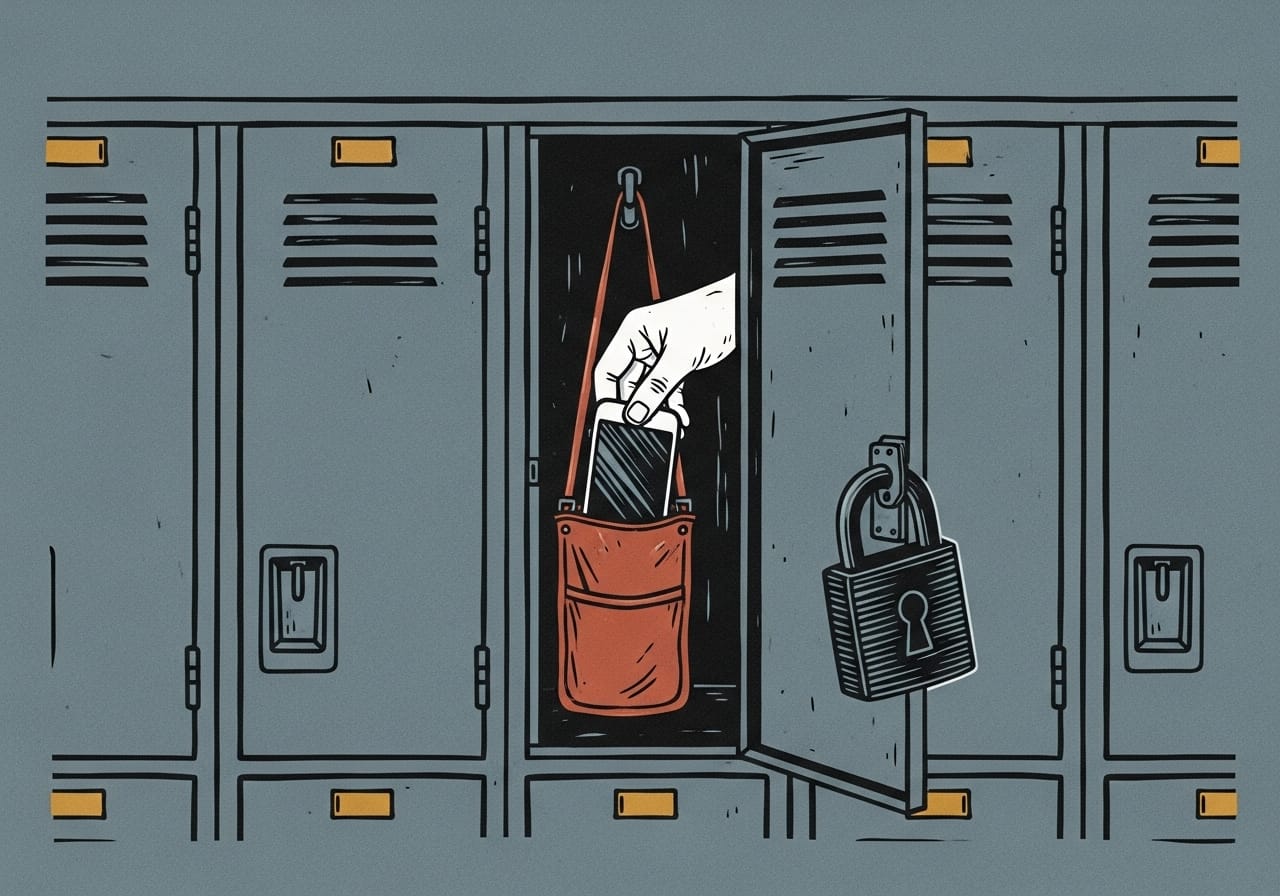
The 75% of us who support bans are right to do so. The evidence shows that true disconnection from our smartphones and tablets improves our children's focus and mental health. But a policy on a piece of paper is not enough. To make the school day truly phone-free, we may need to support schools in using physical storage, such as pouches or lockers, rather than just relying on trust.
More importantly, we need to look at our own habits. It is natural to worry, and it feels safer to be just a text message away. But if we want our children to learn how to disconnect and focus, we have to step back for those few hours. Reclaiming their attention starts with us putting our own phones down.
2026, Christakis, D., et al., Adolescent Smartphone Use During School Hours, JAMA Pediatrics
2025, Children's Commissioner for England, School Phone Policies in England Findings from the Children’s Commissioner’s School and College Survey
2026, Nagata J., et al., Smartphone Use During School Hours by US Youth in the Adolescent Brain Cognitive Development Study, JAMA
2017, Kildare, C. A., & Middlemiss, W., Impact of parents’ mobile device use on parent-child interaction: A systematic review, Computers in Human Behavior
2025, Fatima, S., Impact of Parental Smartphone Use On Child's Socio Emotional Development, International Journal for Multidisciplinary Research
2025, Selak M., et al., Effects of Parents' Smartphone Use on Children's Emotions and Well-Being, European Journal of Investigation in Health, Psychology and Education

Most parents think lifting weights is dangerous for children. Twenty years of paediatric consensus disagree, and the reason has more to do with the nervous system than with muscle.

Parents are told that writing by hand is vital for their child's growing brain, and that screens are eroding it. We sort the viral headlines from the solid evidence, and find the real benefit belongs to one group above all: children still learning their letters.

Your child's fussiness for food is mostly inherited, and most of the things parents try in order to fix it make it worse. Find out why young children refuse food, why it is rarely a parent's fault, and the unglamorous method that genuinely changes how they eat.

Most of what shapes a young life turns out to be joyful and ordinary. A major new study shows what teenagers themselves treasure, and why the way they answer can tell you how they are really doing.