When should a child begin to train, and why the old fear was wrong
Most parents think lifting weights is dangerous for children. Twenty years of paediatric consensus disagree, and the reason has more to do with the nervous system than with muscle.
Most parents think lifting weights is dangerous for children. Twenty years of paediatric consensus disagree, and the reason has more to do with the nervous system than with muscle.

Parents are told that writing by hand is vital for their child's growing brain, and that screens are eroding it. We sort the viral headlines from the solid evidence, and find the real benefit belongs to one group above all: children still learning their letters.
Your child's fussiness for food is mostly inherited, and most of the things parents try in order to fix it make it worse. Find out why young children refuse food, why it is rarely a parent's fault, and the unglamorous method that genuinely changes how they eat.
A major new study has scanned the brains of nearly 10,000 children and tracked them for three years. Its findings reveal which children are most at risk of loneliness, and what can be done to prevent it.


Most parents, if asked whether their child was lonely, would feel fairly certain they would know. A lonely child, the intuition goes, is the one sitting alone at lunch, the one not invited to parties, the one who comes home quieter than the others. Loneliness, we tend to assume, is visible.
The research tells a different story.
A study published this month in the Journal of Child Psychology and Psychiatry is the most comprehensive investigation of childhood loneliness ever conducted.
Led by Ting Yat Wong at the Education University of Hong Kong, with co-investigators at the University of Pennsylvania and Children's Hospital of Philadelphia, the research drew on data from the Adolescent Brain Cognitive Development (ABCD) Study - a landmark, National Institutes of Health-funded longitudinal project tracking over 11,000 children from 21 sites across the United States.
After applying strict inclusion criteria, the team analysed 9,602 children aged nine to ten, following them for three years.
What they measured was extraordinary in its scope: 347 environmental variables, 61 health indicators, and 558 brain imaging features. Their aim was not simply to describe lonely children, but to identify which factors measured at age nine or ten predicted whether a child would go on to experience loneliness between the ages of ten and fourteen.
The results are important reading for any parent.
Before examining which children are most at risk, the study's opening finding is arresting on its own terms. When the study began, parents reported that 12% of the 9,602 children - around 1,158 - were already feeling lonely.
Of those children, 71.6% went on to experience loneliness again at one or more points over the subsequent three years.
Loneliness in childhood, the data make clear, is not a passing phase in most of those who experience it. For nearly three quarters of lonely nine and ten year olds, it persists.
That persistence matters enormously, because the same research literature that documents how common childhood loneliness is also documents what it does to children over time. Multiple studies link chronic childhood loneliness to impaired cognitive development, poorer mental health, increased risk of suicidal thinking, and disrupted sleep.
The long-term consequences are stark: a major review of 90 studies published in Nature Human Behaviour found that adults who experience chronic loneliness face a 26 to 29% higher risk of premature death - figures comparable to those associated with smoking or obesity.
These are not abstractions. They are the long-term trajectories that begin, for many children, in late primary school.
The study examined 294 environmental variables - spanning parental mental health, family income, neighbourhood safety, school environment, pollution, and much else - and found that 40 of them were significantly associated with prospective loneliness, after rigorous statistical adjustment.
The single strongest predictor was a parent's own mental health. Children whose parents were experiencing significant mental health difficulties - depression, anxiety, or a history of psychiatric hospitalisation - were substantially more likely to become lonely over the following three years. The association was strong, and it held across every form of parental mental illness the study examined.
The mechanisms the researchers propose are worth understanding. A parent managing depression or severe anxiety may be less emotionally available - not absent, but less consistently responsive.
Family conflict, a sense of instability at home, or exposure to domestic violence may erode a child's underlying sense of safety and belonging, and the study found that children who had witnessed domestic violence were significantly more likely to go on to experience loneliness.
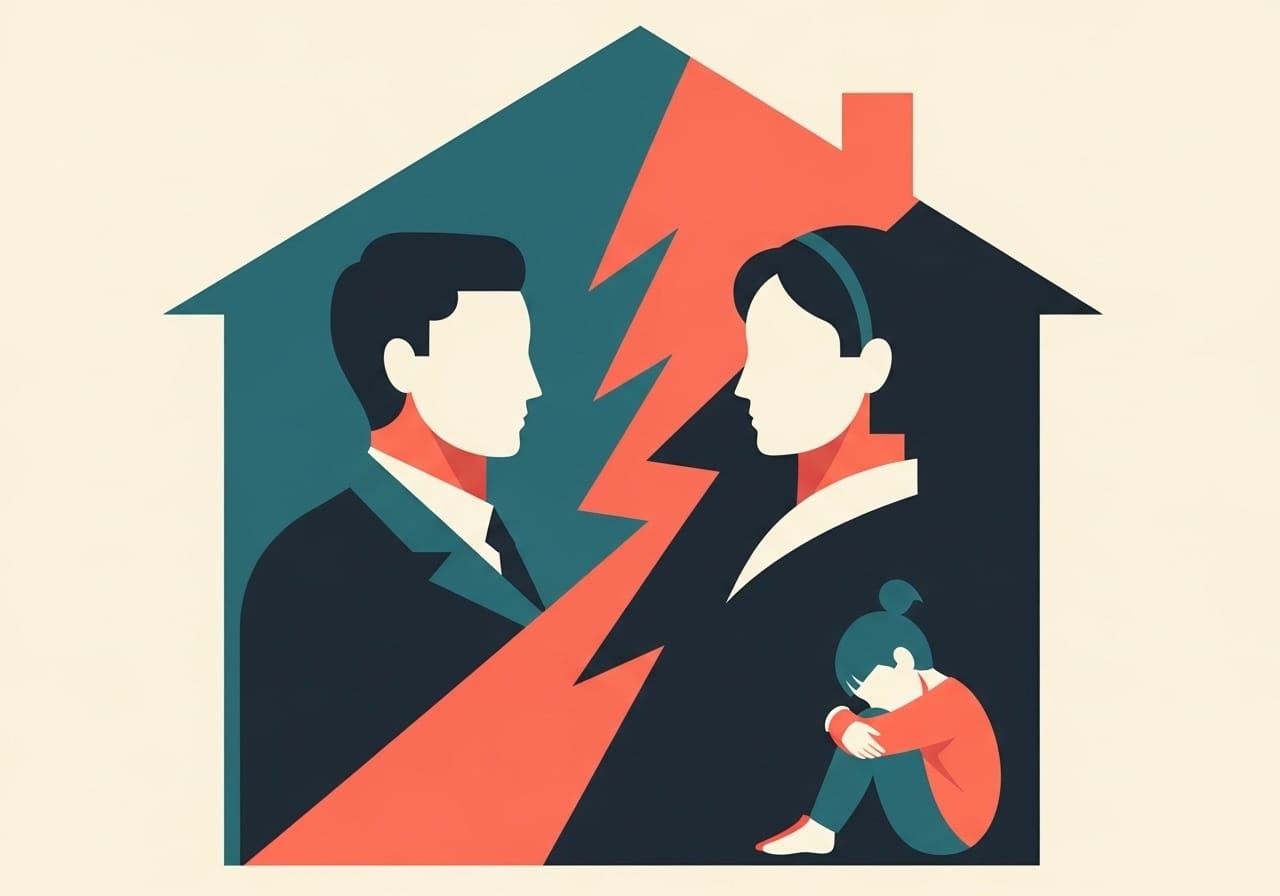
The paper notes that parental mental illness may increase a child's loneliness risk not through any direct mechanism, but by disrupting the quality of family life in ways that leave children feeling less securely connected to the world around them.
Family income was also significantly associated with loneliness risk. Lower income was linked to greater loneliness, a finding consistent with UK data showing that children from the most deprived households are around five times more likely to feel lonely often than their more affluent peers.
The routes through which poverty increases loneliness risk are multiple: reduced access to the extracurricular activities where friendships form; more household stress; less safe outdoor space; and fewer opportunities for the kind of informal, unstructured social contact that builds connection over time.
A child who feels unsafe outside - whether because of traffic, crime, or simply an atmosphere of threat - stops going out. They come home instead, and stay there.
Neighbourhood safety was another significant factor. The study distinguished between the physical features of a neighbourhood - its parks, green space, and density of housing - and how safe children actually feel living there. Both mattered, but the sense of safety was more strongly linked to loneliness than the physical environment alone.
The reason is not difficult to understand. A child who feels unsafe outside - whether because of traffic, crime, or simply an atmosphere of threat - stops going out. They stop playing in the street, stop wandering to a friend's house, stop hanging around in the spaces where childhood friendships are quietly built. They come home instead, and stay there.
The social fabric that children weave through unstructured time in their neighbourhoods is one of the primary ways they learn to connect with others, and when fear cuts that off, loneliness is a predictable consequence.
The quality of a child's school environment also emerged as a significant predictor.
This is consistent with a large European study spanning 23 countries which found that school characteristics - how cooperative or hostile the atmosphere, how much bullying occurs - accounted for more variation in children's loneliness than individual background factors. Schools are not merely academic settings; they are among the most consequential social environments children inhabit, and the quality of that environment shapes social health in ways that persist.
One finding from the study's examination of children's backgrounds came as a surprise. Children who had a twin were significantly more likely to go on to experience loneliness - one of the strongest associations in this part of the analysis.
This seems counterintuitive: twins are never without a companion. But the relationship is likely more complex than companionship. Twins who depend heavily on each other for social connection may invest less effort in building the broader networks of friendships that protect against loneliness later - particularly when circumstances separate them.
Of 49 health indicators examined, 26 - more than half - were significantly associated with prospective loneliness.
Every single mental health measure in the study was linked to greater loneliness risk. Children with more anxiety, depression, behavioural difficulties, or general emotional problems at age nine or ten were substantially more likely to become lonely over the following years.
The strength of these associations was comparable to that of parental mental illness - which, the researchers note, makes sense. Mental health difficulties in parents and mental health difficulties in children are often intertwined, and the findings suggest that addressing one may reduce the risk of loneliness through the other.
Sleep was the most significant physical health factor.
Children with disrupted sleep - difficulty falling asleep, waking in the night, excessive daytime tiredness, or troubled sleep more generally - were substantially more likely to go on to experience loneliness.
This relationship is well established in the research literature and likely runs in multiple directions: poor sleep impairs the emotional regulation and social patience that children need to sustain friendships; withdrawal from social life can in turn make sleep worse; and both may reflect a shared underlying vulnerability.
Physical illness more broadly also increased loneliness risk.
The mechanism is straightforward. Children with health problems have less capacity for the physical activity - sport, playground games, energetic play - through which childhood friendships are most naturally formed and maintained. A child who cannot reliably join in is gradually, and often invisibly, edged to the margins of the social world.
The study also found that children who struggled with the kind of spatial reasoning involved in reading body language and physical cues in social situations - understanding where they are in a room, how close to stand, how others are moving - were somewhat more likely to go on to experience loneliness.
It was a modest association, but a suggestive one: social fluency is partly physical, and children who find the non-verbal dimensions of interaction harder may be at a subtle disadvantage in the rapid, intuitive exchanges of childhood.
The brain scanning component of the study is where the science becomes most striking - and where careful interpretation matters most.
The researchers used a statistical technique to identify patterns across thousands of brain scans that distinguished children who would go on to experience loneliness from those who would not - looking at brain structure, the integrity of the brain's internal communication pathways, and which regions were active together when children were at rest.
The structural brain scans revealed differences in three areas.
Two regions showed more grey matter in children who went on to experience loneliness; one showed less. What matters about these particular areas is what they do. They are all involved in the social brain - the overlapping systems we use to think about ourselves, to imagine what others are feeling, to make sense of our place among other people.

Prior research has shown that the size of one of these regions correlates directly with how large a person's social network is: people with more friends tend to have more grey matter there. The regions identified in this study are ones that, when they work as expected, allow children to navigate social life fluidly. The differences seen in children who went on to be lonely suggest those systems may be developing somewhat differently.
The scans of the brain's internal wiring told a similar story.
Researchers found differences in a major pathway that connects the front and side regions of the brain - a route involved in language processing and, increasingly, in how well people manage social relationships. Children with prospective loneliness showed subtle differences in the integrity of this pathway, reinforcing the picture of a brain in which the circuits underlying social connection are not developing in quite the same way.
The third element of the brain imaging examined which regions were active together when children were doing nothing in particular - simply resting in a scanner. This revealed a different pattern from what researchers typically find in lonely adults.
A brain that looks different in these ways is not a broken brain, and these findings do not imply that a lonely child's trajectory is fixed.
In adults, loneliness tends to show up in the brain regions associated with self-reflection and imagining other people's minds. In these children, the differences showed up elsewhere - in systems associated with attention, emotional response, and the processing of sensory information.
The researchers suggest this may reflect something genuinely developmental: that in children of this age, vulnerability to loneliness shows up not in excessive self-absorption, but in a reduced ability to read and respond to the social signals happening around them in real time.
There is an important caveat to carry through all these brain findings: the study is associative, not causal. The brain differences were measured at the start of the study, before the loneliness had emerged.
What is not yet known is whether those brain differences contributed to the loneliness, whether early social experiences had already begun shaping the brain in these ways, or whether both reflect some shared underlying factor.
A brain that looks different in these ways is not a broken brain, and these findings do not imply that a lonely child's trajectory is fixed.
The study concludes by identifying what it considers the most practically actionable targets - the factors where intervention is both plausible and potentially effective.
Parental mental health sits at the top of this list. For parents already managing mental health difficulties, this is not cause for alarm so much as a reason to seek support - not only for their own wellbeing, but because that wellbeing is demonstrably linked to their child's social development. Treating depression or anxiety is, among other things, an investment in a child's social future.
Schools are another area where the evidence points clearly.
Investing in inclusive, cooperative school environments - reducing bullying, building a genuine sense of belonging - reduces loneliness risk. Schools that feel safe and welcoming are not just better places to learn; they are better places to become a socially confident person.
Neighbourhood safety - and specifically the lived experience of feeling safe, not just whether crime statistics say a place is safe - matters too. Policies and community initiatives that make children feel genuinely secure in their outdoor environments give them back the unstructured social time that fear takes away.
At home, what the research consistently shows is that warmth, connection, and a sense that the family is a secure place to belong are among the most protective things a child can have. Not organised activities or structured interventions - just the daily experience of a family that pays attention to each other.
For parents who are worried about a child, the study offers a few specific signals worth knowing.
Sleep problems and physical health complaints are not just symptoms to treat in their own right - they are also markers of elevated loneliness risk. A child whose sleep is consistently disrupted, or who has recurring physical complaints without clear medical explanation, should prompt attention to the social dimensions of their experience. Anxiety or emotional difficulties in a child should prompt the same.
And if a child was already feeling lonely at nine or ten - as one in eight in this study were - the finding that nearly three quarters of them were still lonely three years later makes a strong case for acting early rather than hoping they grow out of it.
The years between nine and thirteen are a pivotal time in social development. Children are shifting from a world centred on family to one centred on peers, and the skills, confidence, and friendships they build during this period shape their social lives long afterwards.
Getting support in place during this window - whether through the school, the family, or professional help - is considerably more effective than trying to unpick established loneliness in adolescence.
2026, Wong TY, Wong TS, Hou WK, et al., What Makes a Lonely Child: Environmental, Health, and Multimodal Neuroimaging Correlates of Prospective Loneliness in the ABCD Study, Journal of Child Psychology and Psychiatry
2025, Zoellner F, Erhart M, Schütz R, et al., Two Decades of Loneliness Among Children and Adolescents: Longitudinal Trends, Risks and Resources, European Child and Adolescent Psychiatry
2023, Wang F, Gao Y, Han Z, et al., A Systematic Review and Meta-Analysis of 90 Cohort Studies of Social Isolation, Loneliness and Mortality, Nature Human Behaviour
2023, Schnepf SV, Boldrini M, and Blasko Z, Adolescents' Loneliness in European Schools: A Multilevel Exploration of School Environment and Individual Factors, BMC Public Health
2023, Xerxa Y, Rescorla LA, Shanahan L, et al., Childhood Loneliness as a Specific Risk Factor for Adult Psychiatric Disorders, Psychological Medicine
2022, Surkalim DL, Luo M, Eres R, et al., The Prevalence of Loneliness Across 113 Countries: Systematic Review and Meta-Analysis, BMJ
2021, Lam JA, Murray ER, Yu KE, et al., Neurobiology of Loneliness: A Systematic Review, Neuropsychopharmacology
2021, Twenge JM, Haidt J, Blake AB, et al., Worldwide Increases in Adolescent Loneliness, Journal of Adolescence
2020, Hom MA, Chu C, Rogers ML, and Joiner TE, A Meta-Analysis of the Relationship Between Sleep Problems and Loneliness, Clinical Psychological Science
2012, Kanai R, Bahrami B, Roylance R, and Rees G, Online Social Network Size is Reflected in Human Brain Structure, Proceedings of the Royal Society B
2010, Qualter P, Brown SL, Munn P, and Rotenberg KJ, Childhood Loneliness as a Predictor of Adolescent Depressive Symptoms: An 8-Year Longitudinal Study, European Child & Adolescent Psychiatry

Most parents think lifting weights is dangerous for children. Twenty years of paediatric consensus disagree, and the reason has more to do with the nervous system than with muscle.

Parents are told that writing by hand is vital for their child's growing brain, and that screens are eroding it. We sort the viral headlines from the solid evidence, and find the real benefit belongs to one group above all: children still learning their letters.

Your child's fussiness for food is mostly inherited, and most of the things parents try in order to fix it make it worse. Find out why young children refuse food, why it is rarely a parent's fault, and the unglamorous method that genuinely changes how they eat.

Most of what shapes a young life turns out to be joyful and ordinary. A major new study shows what teenagers themselves treasure, and why the way they answer can tell you how they are really doing.