When should a child begin to train, and why the old fear was wrong
Most parents think lifting weights is dangerous for children. Twenty years of paediatric consensus disagree, and the reason has more to do with the nervous system than with muscle.
Most parents think lifting weights is dangerous for children. Twenty years of paediatric consensus disagree, and the reason has more to do with the nervous system than with muscle.

Parents are told that writing by hand is vital for their child's growing brain, and that screens are eroding it. We sort the viral headlines from the solid evidence, and find the real benefit belongs to one group above all: children still learning their letters.
Your child's fussiness for food is mostly inherited, and most of the things parents try in order to fix it make it worse. Find out why young children refuse food, why it is rarely a parent's fault, and the unglamorous method that genuinely changes how they eat.
When a child receives a mental health diagnosis, whether anxiety, ADHD, depression, or something else, parents often want to know how it will impact their schooling. A new study provides some answers.

When a child receives a mental health diagnosis, whether anxiety, ADHD, depression, or something else, parents often want to know what it means for school. Will their child keep up? Will they fall behind?
A study published this week in the Journal of Child Psychology and Psychiatry addresses that question directly, using Finnish national registry data to track what happens to children's school grades in the years after a mental health diagnosis, comparing their academic trajectories with those of peers who received no such diagnosis.

The short answer, across nearly every diagnostic category examined, is that a mental disorder in childhood or adolescence is associated with lower subsequent school achievement. The numbers are real and significant. But they describe what tends to happen in the absence of a good response, not what happens when children are identified early and properly supported.
The Finnish study, led by Yan Li and Christian Hakulinen at the University of Helsinki, followed 837,546 individuals born between 1990 and 2003, tracking their school grades through to the end of comprehensive education.
Academic achievement was measured as an average across all subjects during the final three years of school, rather than a single standardised exam: a broader picture of overall performance, and the measure Finnish schools use when allocating places in upper secondary education. One in six students in the cohort, 16.4%, had received at least one mental health diagnosis before completing comprehensive school.
Students with a mental disorder scored significantly lower, on average, than peers without a diagnosis.
The researchers express this using a standardised measure that captures how far one group falls from the typical score of the whole population; a gap of 0.41 in these terms is what educational researchers consider a moderate-sized effect, real and meaningful rather than marginal.
In a school system in which final grades determine which secondary schools a child can apply to, a difference of this size has direct practical consequences.

The pattern held across almost every specific condition.
Substance use disorders showed the largest effect by some distance, with a gap nearly twice the overall average. Mood disorders, psychotic disorders, anxiety disorders, intellectual disabilities, developmental disorders, and childhood-onset conditions including ADHD all showed substantial associations.
The one clear exception was eating disorders, which were associated with marginally higher school achievement than average, a finding also seen in earlier Danish evidence and linked to the perfectionism that characterises these conditions.
Those Danish findings, from a 2020 nationwide registry study of more than 600,000 individuals published in JAMA Psychiatry, established the broad picture: most childhood mental disorders are associated with lower educational attainment.
The Finnish work builds on that base in important ways. It measures grades across three years rather than a single sitting, includes diagnoses from age one through to graduation, capturing early-onset conditions some prior studies excluded, and draws on both primary and secondary care records. It also introduces an entirely new line of analysis not previously attempted in a nationwide cohort: the role of age at onset.
This is the first study of its kind to ask whether the age at which a child is first diagnosed affects their subsequent academic trajectory, and the answer is clear.
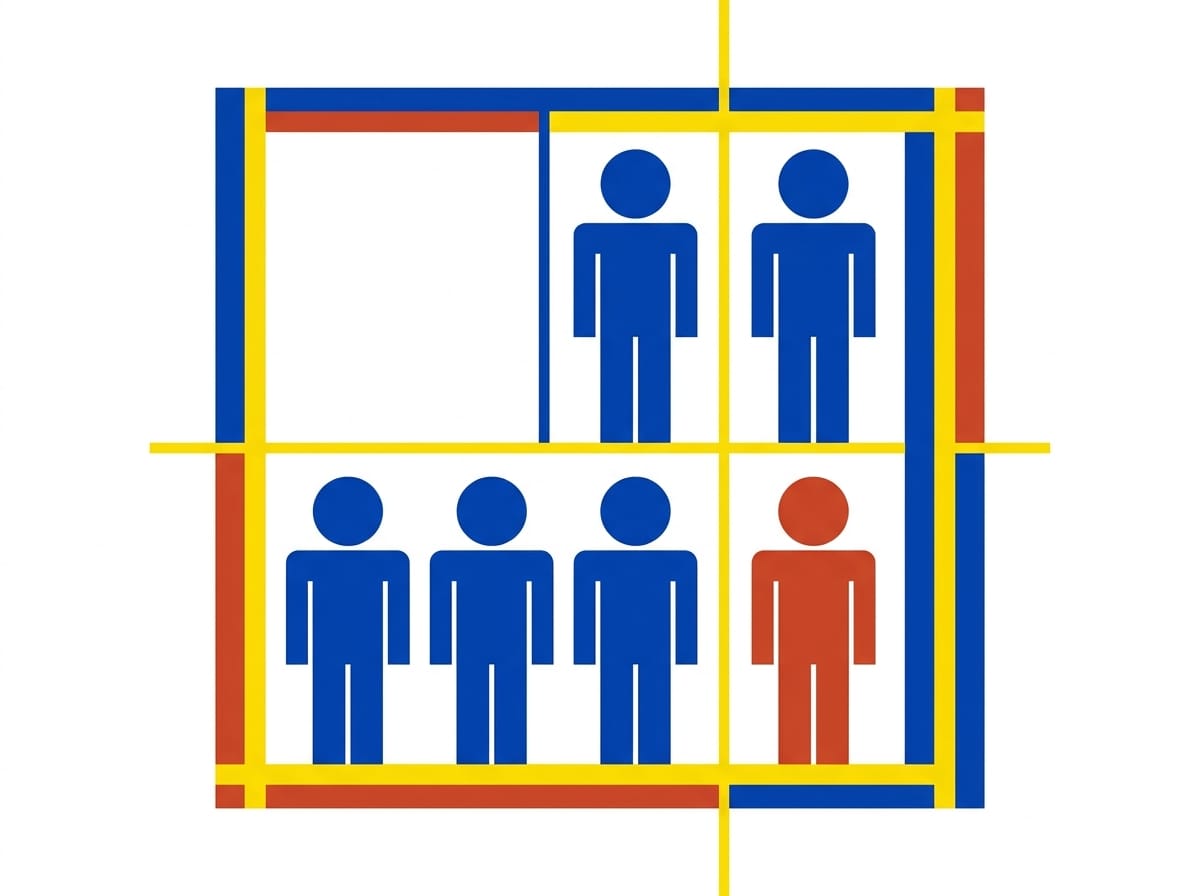
The later the onset, the stronger the association with lower grades. Children first diagnosed in adolescence, between 13 and 17, showed a grade gap more than three times as large as those diagnosed in early childhood, between 1 and 4.
Children diagnosed between 9 and 12 sat roughly in the middle of that range. This gradient held across most specific disorder categories.
The researchers offer several explanations.
Children diagnosed early tend to enter school with support structures already in place, including individual education plans and sustained intervention, that may buffer the academic impact over time. Children diagnosed in adolescence encounter their difficulties at precisely the moment when academic demands are rising, when the frontal brain regions responsible for executive control are still maturing, and when there is less time remaining before the end of compulsory education.
There is also a more troubling possibility: some children diagnosed late may have spent years with unrecognised and unsupported difficulties, accumulating academic disadvantage long before any formal diagnosis was recorded.
A gender difference runs through the findings, and it cuts against a common assumption. The association between mental disorder and lower school achievement was stronger for female students than for male students, with girls showing a grade gap around a fifth larger than boys, a pattern that held across every diagnostic category.
The largest disparity appeared in intellectual disabilities, where the grade effect for girls was substantially larger than for boys.

The researchers propose several mechanisms.
Girls may be more sensitive to academic pressure, which can amplify the cognitive and emotional burden of mental health difficulties.
There may also be a floor effect among boys, whose lower baseline performance, particularly where disorders begin early, leaves less room for further observable decline.
The third explanation, and arguably the most practically important one, is that girls with mental health diagnoses are frequently perceived by adults as less impaired than boys with equivalent conditions. They appear to be managing, even when they are not, and consequently receive less academic and psychological support despite comparable or greater need.
None of this is cause for fatalism. The study is observational and does not imply causality, as the authors are careful to note.
Register data records whether a diagnosis was received, not the quality of what followed: whether the child had good clinical support, maintained consistent attendance, felt believed in by their teachers, or received targeted educational accommodation. Children with untreated conditions were counted in the non-diagnosed comparison group, meaning the true population-level gap may be larger than these figures suggest.
What the evidence on moderating factors consistently shows is that outcomes are not fixed. Consistent school attendance, teacher belief in a student's capacity to succeed, parental encouragement, and early targeted intervention all show up across the literature as protective.
Register studies like this one measure the scale of the problem across hundreds of thousands of children in the absence of a guaranteed good response. They do not describe an inevitable ceiling that children will reach.
For parents, the practical implication is less about anxiety and more about advocacy. Knowing that a child's mental health and their school performance are deeply connected, and that this connection is stronger for girls and stronger when a diagnosis arrives late in childhood, should make the conversation with the school more urgent, not more resigned.
It is a reason to press for educational support alongside clinical support: not after it, and not instead of it.
Li Y, Niemi R, Gutvilig M, Elovainio M, Flykt M, Hakulinen C. Mental disorders in childhood or adolescence and subsequent comprehensive school achievement. Journal of Child Psychology and Psychiatry, Early View, doi:10.1111/jcpp.70181.
Dalsgaard S, McGrath J, Østergaard SD, et al. Association of mental disorder in childhood and adolescence with subsequent educational achievement. JAMA Psychiatry. 2020;77(8):797–805. doi:10.1001/jamapsychiatry.2020.0217

Most parents think lifting weights is dangerous for children. Twenty years of paediatric consensus disagree, and the reason has more to do with the nervous system than with muscle.

Parents are told that writing by hand is vital for their child's growing brain, and that screens are eroding it. We sort the viral headlines from the solid evidence, and find the real benefit belongs to one group above all: children still learning their letters.

Your child's fussiness for food is mostly inherited, and most of the things parents try in order to fix it make it worse. Find out why young children refuse food, why it is rarely a parent's fault, and the unglamorous method that genuinely changes how they eat.

Most of what shapes a young life turns out to be joyful and ordinary. A major new study shows what teenagers themselves treasure, and why the way they answer can tell you how they are really doing.